 |
| September 26, 2017 | Volume 13 Issue 36 |
Mechanical News & Products

Designfax weekly eMagazine

Archives
Partners
Manufacturing Center
Product Spotlight
Modern Applications News
Metalworking Ideas For
Today's Job Shops
Tooling and Production
Strategies for large
metalworking plants
All about Smalley wave springs
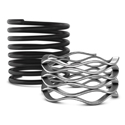 Discover how Smalley wave springs deliver reliable load performance while reducing space requirements in modern assemblies. This short video explains the unique edgewound design and how it creates consistent, predictable force. Learn why engineers choose wave springs over traditional coil springs to optimize size, improve efficiency, and enhance overall product performance.
View this informative Smalley video.
NASA partners with Xometry to fast-track ISS life support systems
 Learn how NASA engineers at the Marshall Space Flight Center employed Xometry's large-format CNC machining capabilities to build mission-critical air purification units in this informative real-world application story. These systems allow astronauts to live 220 miles above Earth.
Read the Xometry case study.
Engineer's Toolbox: Self-clinching fasteners design tips
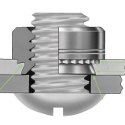 Dozens of types and thousands of variations of self-clinching fasteners (steel, stainless steel, or aluminum) have been engineered over the years. PennEngineering provides three mini case studies where manufacturers benefited greatly by switching to self-clinching fasteners in their assemblies. This article is filled with insightful tips and suggestions.
Read the full article.
New! Magnetite filament for FDM printers
 Virtual Foundry, the company that brought us 3D-printable lunar regolith simulant, has a new product called Magnetite Filamet™, giving users the power to print parts with magnetite -- the most strongly magnetic mineral on Earth -- using the FDM printers they already own. This material is great for electromagnetic shielding. Print using a 0.6-mm hardened-steel, standard-flow nozzle on virtually any open-architecture printer. No Filawarmer required.
Get all the material specs.
Holding firm: Standard parts with increased clamping force
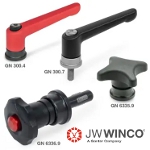 JW Winco has upgraded its proven hand knob nuts, star knob screws, and adjustable hand levers with increased clamping force. Their clamping surface with ball bearing doubles the clamping force while protecting the surface from damage. With typical screws and nuts, roughly half the tightening torque is lost to under-head friction. Get high axial clamping force purely by hand and without tools with these new JW Winco standard parts.
See all your new clamping options.
Cool! Internal threading in hard materials now possible
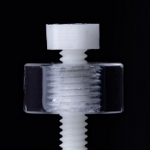 INSACO has a new capability where they can machine an internal thread in ceramic, sapphire, quartz, and other very hard materials. This advance pushes the boundaries of what's possible to support advanced applications that demand high precision and complexity. Ultra-hard materials are alternatives for when metal can't do the job. Ideal for aerospace, medical, and industrial applications.
Learn more. Video available on right side of page.
Sealing fasteners can optimize your designs
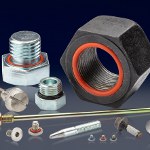 Highly specialized sealing fasteners include sealing screws, sealing nuts, sealing bolts, and sealing washers. Unlike ordinary fasteners, sealing fasteners are configured with a rubber O-ring (or a rubber element) that, when squeezed, permanently seals out a wide range of contaminants from entering and damaging equipment while preventing leakage of toxins into the environment. ZAGO sealing fasteners are designed to withstand harsh weather and extreme temperatures and are vibration and pressure resistant.
Learn all about ZAGO's wide selection of sealing fasteners.
New and improved: Electronic flow control for smarter compressed air use
 EXAIR's newly redesigned EFC™ Electronic Flow Control makes it easier than ever to minimize compressed air use in automated industrial processes. The EFC pairs a photoelectric sensor with programmable timing control to automatically turn on compressed air only when needed, eliminating waste during production gaps. The latest design introduces asynchronous timing for greater control over operating cycles, convenient external programming that eliminates the need to remove the enclosure cover to make adjustments, and a sleek new appearance.
Learn more.
SOLIDWORKS: Mastering sheet metal -- advanced tips and tricks
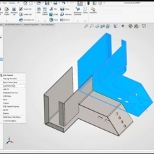 GoEngineer's Brady Daniels, Senior Applications Engineer, gives a master class in next-level sheet metal design. This on-demand webinar covers practical tips and techniques aimed at expanding your understanding and improving real-world workflows. Topics include bend calculations, comparing design approaches, how flat patterns work, and embracing multi-body design. Skip through or take in the whole presentation when you have time. [Credit: Screenshot courtesy of GoEngineer]
View the GoEngineer video.
14 years in a row! Smalley recognized with GM Supplier Quality Excellence Award
 Kudos to the team at Smalley! A continued focus on quality, consistency, and customer support has earned the company -- a world leader in retaining rings and wave springs -- the General Motors' 2025 Supplier Quality Excellence Award, marking the company's 14th consecutive year receiving the hard-to-win recognition.
Read the full article.
Award-winning bio-based instant engineering adhesive resists heat and humidity
 Bostik has launched Born2Bond™ Ultra K85, the first-ever instant engineering adhesive processed from 60% bio-based raw materials. This material has been created for design engineers, product designers, and manufacturers looking for an ultra-durable adhesive that provides exceptional resistance to humidity and high temperatures. It delivers premium performance -- even bonding dissimilar materials -- while not compromising on safety, health, or the environment. It earned the Adhesive & Sealant Industry's 2026 Innovation Award.
Learn more.
Siemens Meet at the Machine: Be productive from day one of new CNC machine delivery
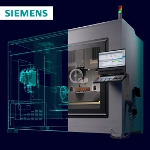 Traditionally, many programming, validation, and training activities begin only after a machine is installed. Not anymore. Meet at the Machine is Siemens' new initiative uniting machine builders, software, and automation for next-level CNC through a continuous digital thread across engineering, programming, virtual validation, and execution. By pairing a Digital Twin with Digital CNC powered by SINUMERIK, manufacturers can prepare, validate, train, and optimize workflows before your specialized machine's physical delivery! TRAK Machine Tools is the launch partner -- see what they are doing.
Learn more.
How to master metal powder management in 3D printing
 What's the real cost of "good enough" powder tracking for powder-bed fusion 3D-printing machines? According to Tim Wischeropp, CEO and Co-Founder of amsight, the technology is rife with hidden costs. Every cycle, every handling step, every exposure, and every mixing decision plays a part. Surprisingly, though, with the right strategy, users can turn their losses into a competitive edge. Learn how.
Read the full article.
Aluminum oxide filament for FDM printers
 Virtual Foundry, the company that brought us 3D-printable lunar regolith simulant, has a new product called Aluminum Oxide Filamet™, giving users the power to print alumina parts using the FDM printers they already own. This composite 3D-printing material allows researchers, engineers, and makers to bypass expensive ceramic tooling and produce pure ceramic components in-house. Print using a 0.6-mm hardened-steel, standard-flow nozzle on virtually any open-architecture printer.
Get all the material specs.
New metal extrusion retrofit system helps manufacturers get into ShAPE
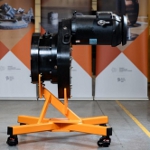 A new invention from the Department of Energy's Pacific Northwest National Laboratory could soon help manufacturers more easily adopt the lab's patented Shear Assisted Processing and Extrusion (ShAPE™) technology, enabling faster manufacturing of superior extrusion products while reducing costs and energy use.
Read the full article.
New ultra-thin camera design creates images without lenses
By Robert Perkins, Caltech
Traditional cameras -- even those on the thinnest of cell phones -- cannot be truly flat due to their optics: lenses that require a certain shape and size in order to function. At Caltech, engineers have developed a new camera design that replaces the lenses with an ultra-thin optical phased array (OPA). The OPA does computationally what lenses do using large pieces of glass: It manipulates incoming light to capture an image.
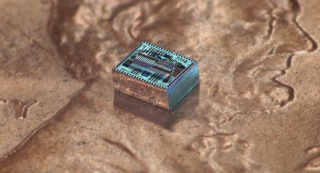
The OPA chip placed on a penny for scale. [Credit: Caltech/Hajimiri Lab]
Lenses have a curve that bends the path of incoming light and focuses it onto a piece of film or, in the case of digital cameras, an image sensor. The OPA has a large array of light receivers, each of which can individually add a tightly controlled time delay (or phase shift) to the light it receives, enabling the camera to selectively look in different directions and focus on different things.
"Here, like most other things in life, timing is everything. With our new system, you can selectively look in a desired direction and at a very small part of the picture in front of you at any given time, by controlling the timing with femto-second -- quadrillionth of a second -- precision," says Ali Hajimiri, Bren Professor of Electrical Engineering and Medical Engineering in the Division of Engineering and Applied Science at Caltech, and the principal investigator of a paper describing the new camera. The paper was presented at the Optical Society of America's (OSA) Conference on Lasers and Electro-Optics (CLEO) and published online by the OSA in the OSA Technical Digest in March 2017.
"We've created a single, thin layer of integrated silicon photonics that emulates the lens and sensor of a digital camera, reducing the thickness and cost of digital cameras. It can mimic a regular lens, but can switch from a fish-eye to a telephoto lens instantaneously -- with just a simple adjustment in the way the array receives light," Hajimiri says.
Phased arrays, which are used in wireless communication and radar, are collections of individual transmitters, all sending out the same signal as waves. These waves interfere with each other constructively and destructively, amplifying the signal in one direction while canceling it out elsewhere. Thus, an array can create a tightly focused beam of signal, which can be steered in different directions by staggering the timing of transmissions made at various points across the array.
A similar principle is used in reverse in an optical phased array receiver, which is the basis for the new camera. Light waves that are received by each element across the array cancel each other from all directions, except for one. In that direction, the waves amplify each other to create a focused "gaze" that can be electronically controlled.
"What the camera does is similar to looking through a thin straw and scanning it across the field of view. We can form an image at an incredibly fast speed by manipulating the light instead of moving a mechanical object," says graduate student Reza Fatemi (MS '16), lead author of the OSA paper.
Last year, Hajimiri's team rolled out a one-dimensional version of the camera that was capable of detecting images in a line, such that it acted like a lensless barcode reader but with no mechanically moving parts. This year's advance was to build the first two-dimensional array capable of creating a full image. This first 2D lensless camera has an array composed of just 64 light receivers in an 8 by 8 grid. The resulting image has low resolution. But this system represents a proof of concept for a fundamental rethinking of camera technology, Hajimiri and his colleagues say.
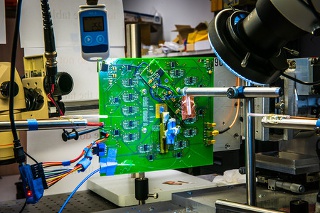
The OPA chip within its larger housing. [Credit: Caltech]
"The applications are endless," says graduate student Behrooz Abiri (MS '12), coauthor of the OSA paper. "Even in today's smartphones, the camera is the component that limits how thin your phone can get. Once scaled up, this technology can make lenses and thick cameras obsolete. It may even have implications for astronomy by enabling ultra-light, ultra-thin enormous flat telescopes on the ground or in space."
"The ability to control all the optical properties of a camera electronically using a paper-thin layer of low-cost silicon photonics without any mechanical movement, lenses, or mirrors, opens a new world of imagers that could look like wallpaper, blinds, or even wearable fabric," says Hajimiri. Next, the team will work on scaling up the camera by designing chips that enable much larger receivers with higher resolution and sensitivity.
VIDEO: At Caltech, engineers have developed a new camera design that replaces the lenses with an ultra-thin optical phased array (OPA). The OPA does computationally what lenses do using large pieces of glass: It manipulates incoming light to capture an image.
The study is titled, "An 8X8 Heterodyne Lens-less OPA Camera." This research was funded by the Rothenberg Innovation Initiative (RI2), previously known as the Caltech Innovation Initiative (CI2).
Published September 2017
Rate this article
View our terms of use and privacy policy