 |
| June 02, 2020 | Volume 16 Issue 21 |
Electrical/Electronic News & Products
Designfax weekly eMagazine

Archives
Partners
Manufacturing Center
Product Spotlight
Modern Applications News
Metalworking Ideas For
Today's Job Shops
Tooling and Production
Strategies for large
metalworking plants
New 22-mm pushbutton switch
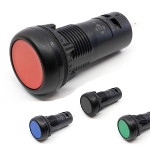 Discover the new PBA22 Series panel-mount pushbutton switch from E-Switch, engineered for industrial controls, automation, and operator interfaces. Featuring an IP65 rating, a standard 22-mm cutout, and a modular contact block design, it offers unmatched system flexibility. Enjoy reliable performance with multiple circuit options, up to 6A at 230 VAC ratings, quick-connect terminals, and vibrant actuator colors.
Learn more.
Be one of the first to harness next-gen Edge AI
 SECO's new SOM-SMARC-Dragonwing-IQ8 is the world's first industrial SMARC module powered by Qualcomm Dragonwing™ IQ8 technology. Delivering 40 TOPS of AI performance, high-speed industrial connectivity, and seamless Arduino transition, it is purpose-built for robotics, vision, and autonomous systems. OEM evaluation samples are limited -- request yours today to start building.
Learn more.
The 7 best ways to automate your SOLIDWORKS designs
 According to the experts at Hawk Ridge Systems, automating tasks in SOLIDWORKS is a great way to improve productivity and make your life easier. Learn about SOLIDWORKS' many automation capabilities including: tools for automated drawing generation, design tables, custom macros, global variables and equations, and brand-new AI-based tools built directly into SOLIDWORKS. See how these features can help you work more efficiently.
View the video.
How standard AI is messing up industrial automation quotes
 Reshape Automation's new Industrial AI Accuracy Index 2026 tested three leading AI models -- GPT-6 Astra, Claude, and Gemini -- on 100 questions drawn from what customers ask distributors and OEMs every day, covering parts from 14 industrial manufacturers. From memory alone, the models got 12% to 14% right. With web search, the best scored 52%. About 1 in 3 wrong answers gave a specific part number or figure with no caveat.
Read the full article.
Engineer's Toolbox: What is ground loop feedback?
 Improper grounding can create problems in data logging, data acquisition, and measurement and control systems. One of the most common problems is known as ground loop feedback. Experts at CAS DataLoggers run through five ways to eliminate this problem.
Read the full article.
New pressure transmitters from AutomationDirect
 Automation-Direct's new MP Sensor Inline pressure transmitters plug directly into pneumatic lines via built-in push-in connections from 5/32" to 3/8" (and 6 mm). Ultra-compact and mountable anywhere, they deliver +/-0.5% accuracy, IP68 durability, and versatile outputs (4-20 mA, NPN/PNP, IO-Link). Need touch control? The new P.Touch series adds a TFT touchscreen for effortless setup and sub-3ms response.
Learn more and get all the specs.
High-capacity benchtop video measurement system
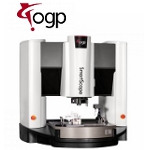 Optical Gaging Products has introduced the SmartScope® E18, a compact, benchtop video measurement system. Featuring a 12" x 12" stage, IntelliCentric™-E fixed-lens optics, and VIRTUAL ZOOM™ technology, it offers fully automatic 3-axis performance without taking up floor space. Standard LED lighting, a rigid fixed-bridge design, optional touch probes, and advanced metrology software ensure accurate, repeatable inspection.
Learn more.
Tech Tip: Fan selection - Why airflow is not just CFM
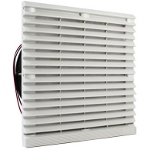 For many engineers, fan selection starts and ends with a single number: CFM (cubic feet per minute). Higher CFM feels like a clear win. More air moved must mean better cooling. However, in practice, this assumption is one of the most common causes of thermal problems, excess noise, and late-stage redesigns. Find out why.
Read this Orion Fans technical article.
Useful! Snap-together LED enclosure lighting
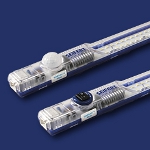 Seifert StripLite SL 4000 Series LED enclosure lighting provides bright illumination to 700 lumens. On/off switch and motion sensor models are available. Easily daisy chain up to 16 light strips. Magnetic or clip mounting. See video/info on website or contact Bristol Instruments for more information.
Learn about snap-together lighting.
The hidden hardware helping AI's heat problem: PCHEs
 Across AI infrastructure, thermal constraints now connect semiconductor design with power and cooling systems. More compact, lighter, and efficient than conventional shell-and-tube models, printed circuit heat exchangers save floor space, reduce energy costs, and improve overall efficiency in dense, hyperscale environments.
Read the full article.
Nearly 1,000 parts: Industrial enclosure range expanded
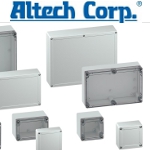 Altech Corp. has expanded its industrial enclosure lineup to 10 unique series with nearly 1,000 parts! Designed for control, junction, and terminal applications, these plastic and aluminum housings offer up to IP69 protection. They mount directly to walls or panels, resisting chemicals, corrosion, flames, impacts, and severe outdoor conditions without sacrificing aesthetics.
Find your perfect enclosure today.
Cool Tools: MetraSCAN BLACK2 -- Next-gen shop-floor 3D inspection
 You'll gain some superhero powers when you brandish FARO CREAFORM's new MetraSCAN BLACK2, a next-gen portable metrology-grade optical 3D scanner engineered to deliver total inspection flexibility on the shop floor. This unit boasts a 3-in-1 architecture that combines C-Track scanning, stand-alone scanning, and probing in a single metrology-grade system.
Read the full article.
Compact, touchless position sensors: Wear-free operation in tight spaces
Novotechnik's TFD-4000 Series of touchless linear position sensors delivers wear-free measurement in tight spaces. Featuring ranges up to 50 mm, IP67 protection, 12-bit resolution, and analog outputs, these reliable sensors operate from -40 C to 125 C across diverse industrial, mobile, and medical applications such as short-stroke linear valve positioning, solenoid valves, off-highway brake actuation, and more.
Learn more.
World's first 10-m safety laser scanner: See farther, protect more
Datasensing, Datalogic's Sensor & Safety and Machine Vision business unit, has launched the SLS10 Safety Laser Scanner, the world's first 10-meter safety laser scanner. Delivering a 275-degree scanning angle, 240-m2 of coverage, and an 84-msec response time, the SLS10 protects larger workspaces with fewer devices. It features best-in-class angular resolution for precise AGV navigation, SIL-2/PLd compliance, dust immunity, and the new ONEGUI platform for simplified configuration.
Learn more and see it in action.
Accelerate AI-driven machine vision systems
BitFlow has announced full production of its Claxon CXP-12 frame grabbers, designed for NVIDIA GPU-accelerated machine vision. Across five models, the CoaXPress 2.0 lineup delivers up to 50 Gbps -- five times 10 GigE Vision -- eliminating data bottlenecks. The full CXP-12 specification ensures deterministic, high-bandwidth streaming to unleash modern AI inference models.
Learn more.
Researchers create paper-thin transistor that handles more than 8,000 V
The advancement surpasses silicon and other technologies, and could help improve distances that electric cars and locomotives can travel.
By Cory Nealon, University At Buffalo
People love their electric cars, but not so much the bulky batteries and related power systems that take up precious cargo space.

"The passivation layer is a simple, efficient, and cost-effective way to boost the performance of gallium oxide transistors," says Uttam Singisetti, associate professor of electrical engineering, University at Buffalo.
Help could be on the way from a gallium oxide-based transistor under development at the University at Buffalo.
In a study published in the June edition of IEEE Electron Device Letters, electrical engineers describe how their tiny electronic switch can handle more than 8,000 volts (V), an impressive feat considering it's about as thin as a sheet of paper.
The transistor could lead to smaller and more efficient electronic systems that control and convert electric power in electric cars, locomotives, and airplanes. In turn, this could help improve how far these vehicles can travel.
"To really push these technologies into the future, we need next-generation electronic components that can handle greater power loads without increasing the size of power electronics systems," says the study's lead author, Uttam Singisetti, who adds that the transistor could also benefit microgrid technologies and solid-state transformers.
Singisetti, PhD, associate professor of electrical engineering at the UB School of Engineering and Applied Sciences, and students in his lab have been studying the potential of gallium oxide, including previous work exploring transistors made from the material.
Perhaps the chief reason researchers are exploring gallium oxide's potential for power electronics is a property known as "bandgap."
Bandgap measures how much energy is required to jolt an electron into a conducting state. Systems made with wide-bandgap materials can be thinner, lighter, and handle more power than systems made of materials with lower bandgaps.
Gallium oxide's bandgap is about 4.8 electron volts, which places it among an elite group of materials considered to have an ultrawide bandgap.
The bandgap of these materials exceeds that of silicon (1.1 electron volts), the most common material in power electronics, as well as potential replacements for silicon, including silicon carbide (about 3.4 electron volts) and gallium nitride (about 3.3 electron volts).
A key innovation in the new transistor revolves around passivation, which is a chemical process that involves coating the device to reduce the chemical reactivity of its surface. To accomplish this, Singisetti added a layer of SU-8, an epoxy-based polymer commonly used in microelectronics.
The results were impressive.
Tests conducted just weeks before the COVID-19 pandemic temporarily shuttered Singisetti's lab in March show the transistor can handle 8,032 V before breaking down, which is more than similarly designed transistors made of silicon carbide or gallium nitride that are under development.
"The higher the breakdown voltage, the more power a device can handle," says Singisetti. "The passivation layer is a simple, efficient, and cost-effective way to boost the performance of gallium oxide transistors."

The graph image on the left shows the breakdown voltage of three different versions of the gallium oxide transistor. The illustration on the right shows the configuration and materials that make up the transistor that achieved a breakdown voltage of more than 8,000 V. [Credit: University at Buffalo]
Simulations suggest the transistor has a field strength of more than 10 million V (or 10 MV) per centimeter. Field strength measures the intensity of an electromagnetic wave in a given spot, and it eventually determines the size and weight of power electronics systems.
"These simulated field strengths are impressive. However, they need to be verified by direct experimental measurements," Singisetti says.
Additional authors of the study include current and past members of Singisetti's research lab: Sudipto Saha, Shivam Sharma, and Ke Zeng.
The research was supported by the U.S. Air Force Office of Scientific Research and by the U.S. National Science Foundation.
Published June 2020
Rate this article
View our terms of use and privacy policy