 |
| October 06, 2020 | Volume 16 Issue 38 |
Motion Control News & Products

Designfax weekly eMagazine
Archives
Partners
Manufacturing Center
Product Spotlight
Modern Applications News
Metalworking Ideas For
Today's Job Shops
Tooling and Production
Strategies for large
metalworking plants
OnRobot launches 2FGP20 Fork electric gripper for challenging palletizing applications
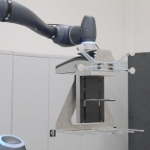 OnRobot has launched the 2FGP20 Fork, a standardized, all-electric fork palletizing gripper designed specifically for open boxes, display boxes, and other low-rigidity boxes. It is the first globally available, out-of-the-box tool for these often-challenging packaging types.
Read the full article.
Say goodbye to circular motion limits
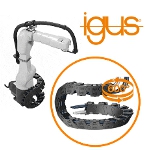 The igus twisterchain® delivers ultra-smooth 360-degree+ rotary and spiral movement for high loads at speeds over 1 m/s. Engineered with a modular, cable-friendly design and guided trough technology, it is lab tested to 1M+ cycles. Maximum strength, ultimate flexibility, and built to handle your toughest rotating applications with ease. The unsupported twisterchain is perfect for the robot base of small industrial robots.
Learn more.
How to: Multiplexed control of closed-loop piezo actuators
 Piezoelectric actuators are widely used in adaptive optics because they combine high positioning resolution, stiffness, fast response, useful stroke, and mechanical robustness. The challenge comes when the number of actuators increases. Learn how a research team at PI developed and tested a multiplexed system for closed-loop operation, with a focus on the factors that limit its performance.
Read this informative PI technical article.
Next-gen smart servos with higher performance
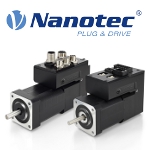 Nanotec's next-gen PD2 smart servos integrate a NEMA 17 motor, controller/drive, and absolute encoder into a compact unit. Offering up to 75% higher rated torque in stepper and BLDC versions, they feature FOC, EtherCAT, and IP65 protection. Applications include packaging machinery, laboratory automation, medical tech, semiconductor manufacturing, intralogistics, and printing equipment.
Learn more.
Meet Hevi-Rail: The heavy-duty roller bearing system
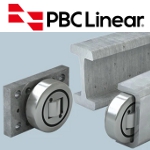 Hevi-Rail is a cost-effective, heavy-duty linear bearing system designed for medium- to low-precision applications. Easy to mount and align, its hardened steel components evenly disperse forces to handle loads up to 60 tons. Offering high radial and axial capacities, it excels under continuous use in harsh environments like foundries and construction sites.
Learn more and see Hevi-Rail in action.
NORD expands compact VFD family up to 200 hp
 NORD DRIVE-SYSTEMS' NORDAC PRO SK 500P VFD series now powers up to 200 hp with multi-protocol Ethernet, integrated functional safety, and wireless diagnostics. Its compact design reduces cabinet space and costs across applications such as airport baggage handling, intralogistics, bulk material handling, and packaging. Advanced variants deliver precise control, online parameterization, and free NORDCON diagnostic software.
Learn more and get all the options and specs.
How to maximize and optimize stepper motor control
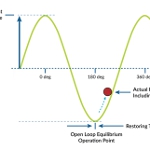 Engineers from PMD take a comprehensive look at how to control two-phase stepper motors, beginning with the basics (operations, strengths, and weaknesses) and moving on to traditional and updated advanced techniques for control including closed loop. A very thorough presentation.
Read the Performance Motion Devices technical article.
ABB Baldor-Reliance washdown motors: 40 years of durability
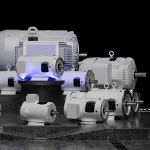 Celebrating four decades of washdown excellence, ABB's Baldor-Reliance line expands to include White Washdown models up to 150 hp with NEMA Premium efficiency. From cast iron to stainless steel, this complete portfolio -- including paint-free options -- delivers rugged, high-horsepower reliability. Power your processing operations with unmatched durability engineered specifically for demanding, wet, and humid environments.
Learn more.
Cobots get 4 m tall with the 8th-Axis Vertical Robot Transfer Unit
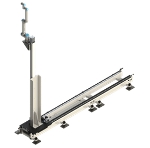 Designed to optimize industrial processes across various sectors, the 8th-Axis Vertical Robot Transfer Unit (RTU-V) from Bishop-Wisecarver features a vertical travel length of up to 4 m, enabling a single small robot or cobot to cover large areas traditionally requiring multiple robots. This innovation not only boosts productivity but also offers considerable cost savings, making it an ideal solution for industries such as logistics, manufacturing, agriculture, packaging, and more. Extended reach allows robots to perform tasks on oversized workpieces, such as rocket tubes, boat hulls, and aerospace structures, with ease.
View the video.
Simplify pick and place with the THK PPR
 THK's Pick-and-Place Robot PPR is a robot that can pick up delicate or minute workpieces such as electronic components and quickly and accurately transfer and assemble them to the base. In addition to the basic movements of raising, lowering, and rotating, various sensors (such as a force sensor), solenoid valves, and controller are all in one unit. The PPR is a process-optimized robot that can improve the production speed of the parts assembly processes and reduce work damage.
Learn more.
New ROBOMACHINE products and more from FANUC
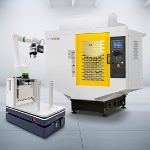 FANUC America demonstrated the future of manufacturing at IMTS 2026 last week, showcasing how Physical AI-powered automation integrates advanced CNC, machining, and robotics to boost productivity and speed deployment. One highlight was the debut of the ROBODRILL DC Series machining centers -- including the high-speed D54CS and D74CS models -- alongside interactive demonstrations featuring collaborative robots, robotic welding, material joining, painting, and assembly technology.
See all the FANUC new tech featured at IMTS.
What is a stick-slip bi-phase positioning stage?
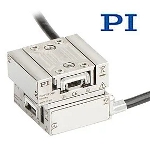 PI (Physik Instrumente) is expanding its Bi-Phase Inertia Drive (BIX) technology with new motor architectures for compact, high-precision nanopositioning applications. Based on the piezo stick-slip principle, BIX stages replace conventional single actuators with two synchronized multilayer piezo actuators. This compact design delivers precise, repeatable motion while maintaining piezo inertia self-locking.
Learn more about this technology.
Universal Robots unveils Gen 7 robot platform!
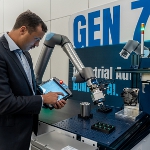 Redesigned from controller to tool flange, the new Gen 7 robot platform is out-of-the-box AI-ready, giving companies the modern software tools and next-level connectivity they need to confidently take AI from the lab into industrial operations. Gen 7 represents a unified system upgrade designed to make even the most demanding tasks and setups easier. See all the new features -- they are significant.
Read the full article.
Adaptor mount and hub options provide flexibility
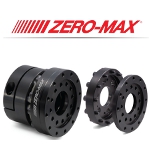 Zero-Max's new CD Power-Series Flexible Shaft Couplings feature ISO Flange Adaptors matching ISO 9409-1 patterns on gear reducers and robotics. Eliminating custom transitions, this direct connection enhances torsional stiffness and positioning accuracy while saving space, weight, and inertia. Offering continuous torque up to 65,000 in.-lb and versatile hub options, these compact couplings deliver high power density.
Learn more.
Top-shelf motors: Completely revised maxon catalog
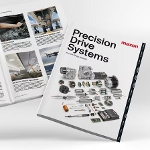 maxon has completely overhauled its 2026/2027 catalog, streamlining its portfolio to reduce complexity and improve navigation. The new structure features dedicated sections for business units -- Medical, Aerospace, Industrial Automation, Mobility -- and specialized fields like Robotics and Space. Key product highlights include new ECX PRIME and ECX FLAT motors, GSW planetary gearheads, and ESCON2/EPOS4 controllers.
Learn more and check it out.
Drop-in-place Air Force ROBOpilot Unmanned Air Platform returns to flight after landing mishap last year
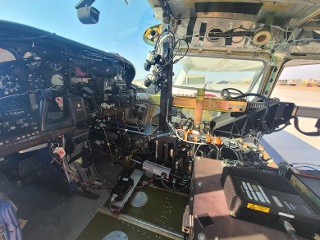
The Air Force Research Laboratory resumed flight testing of the ROBOpilot unmanned air platform and completed a successful fourth flight test September 24 at Dugway Proving Ground, UT. [Photo courtesy: AFRL]
The Air Force Research Laboratory (AFRL) Center for Rapid Innovation (CRI) and DZYNE Technologies Inc. resumed flight testing of the ROBOpilot unmanned air platform and completed a successful fourth flight test September 24 at Dugway Proving Ground, UT, during which ROBOpilot flew for approximately 2.2 hours, completing all test objectives.
This event represents a return to flight for ROBOpilot, a complete drop-in robotic system, which completed its first flight in August 2019, but later incurred damage during a landing mishap after a two-hour flight. Following a Safety Investigation Board probe, investigators and project engineers briefed AFRL leadership, the safety investigation convening authority, and the AFRL flight test approval authority.
Armed with the incident report, "The CRI and DZYNE team analyzed the findings and incorporated the recommendations to ensure the success of this latest test," said Marc Owens, CRI's Program Manager for ROBOpilot. "We determined the cause of the mishap, identified the best course of corrective action, and we're very pleased to be flight testing again," he said.
"Since this is a completely new build with a different Cessna 206, we re-accomplished the flight test points completed on our first flight last year," he explained. "ROBOpilot is too good an idea to let the mishap derail the development of this technology, Owens said.
ROBOpilot is an applique (add-on) kit that converts a general aviation aircraft into an unmanned aerial vehicle rapidly and affordably without making any permanent modifications to the aircraft. The system can fly missions autonomously and then be removed to return the plane to its manned configuration. Installation involves removing the seats and attaching the robot to the seat rails.

The ROBOpilot unmanned air platform flew a Cessna 206 for approximately 2.2 hours, completing all test objectives. [Photo courtesy: AFRL]
ROBOpilot interacts with the aircraft in the same manner as a pilot in that it "grabs" the yoke, pushes the rudders and brakes, controls the throttle, reads the dashboard gauges, etc. ROBOpilot has its own internal sensors, like GPS and an inertial measurement unit, for situational awareness. A computer analyzes all information to make decisions on how best to control the flight.
AFRL established the Center for Rapid Innovation in 2006 to streamline AFRL's application of new and existing technologies to address dynamic changes in air, space, ground, and cyber battlespaces and solve evolving and urgent operational challenges. The execution of this unique process uses diverse subject matter expertise and a collaborative government-industry technical and management capability to rapidly develop, test, and deploy innovative prototype solutions for dynamic operational environments.
Source: Air Force Research Laboratory
Published October 2020
Rate this article
View our terms of use and privacy policy