 |
| June 27, 2023 | Volume 19 Issue 24 |
Designfax weekly eMagazine
Archives
Partners
Manufacturing Center
Product Spotlight
Modern Applications News
Metalworking Ideas For
Today's Job Shops
Tooling and Production
Strategies for large
metalworking plants
Mercedes-Benz Vision One-Eleven: 1960s and 70s experiments reborn in new supercar concept
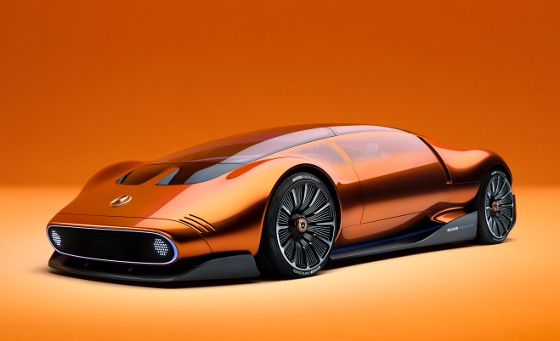
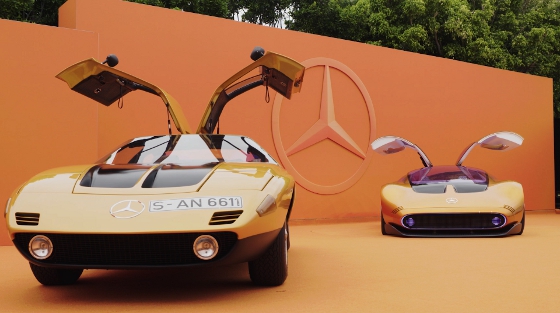
Mercedes-Benz has given a hint of what its future design language looks like by producing a one-off, all-electric, super-slick supercar called the Vision One-Eleven. The concept gets its DNA from the company's C 111 experimental vehicles from the 1960s and 70s, which were used to test revolutionary Wankel and turbodiesel engines, and also polymer-based bodyshells. Those aerodynamic, mid-engine sports cars are considered design icons of their era, in part due to their distinctive gullwing doors and eye-catching orange-and-black paintwork.
"The Mercedes-Benz Vision One-Eleven combines breathtaking design with groundbreaking powertrain technology," said Markus Schafer, member of the Board of Management of Mercedes-Benz Group AG and chief technology officer. "Like its historical namesake, it explores new paths for the future of sporting performance. At the heart of the compact and extremely efficient powertrain is the innovative YASA axial-flux high-tech electric motor. It offers a motorsport-like power output from a considerably smaller package. This makes the YASA axial-flux motor ideal for electric high-performance vehicles. Combined with the liquid-cooled cylindrical-cell battery with Formula 1-inspired cell chemistry, the Mercedes-Benz Vision One-Eleven is yet another proof point for the broad performance spectrum encompassed by our four-pronged development strategy for electric drive."
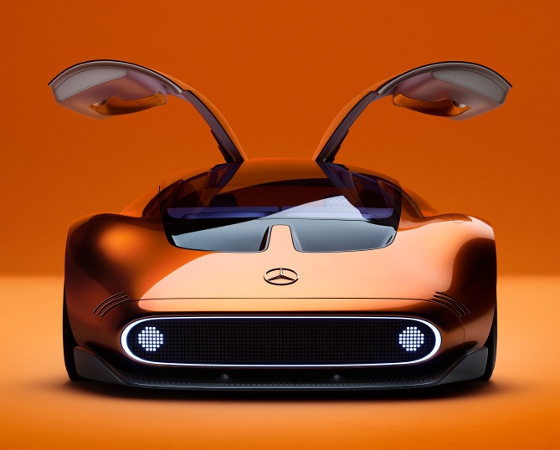
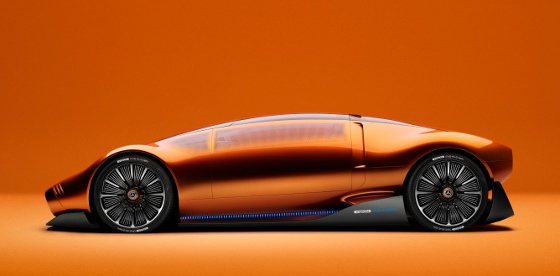
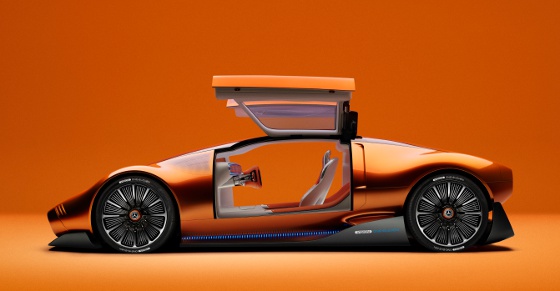
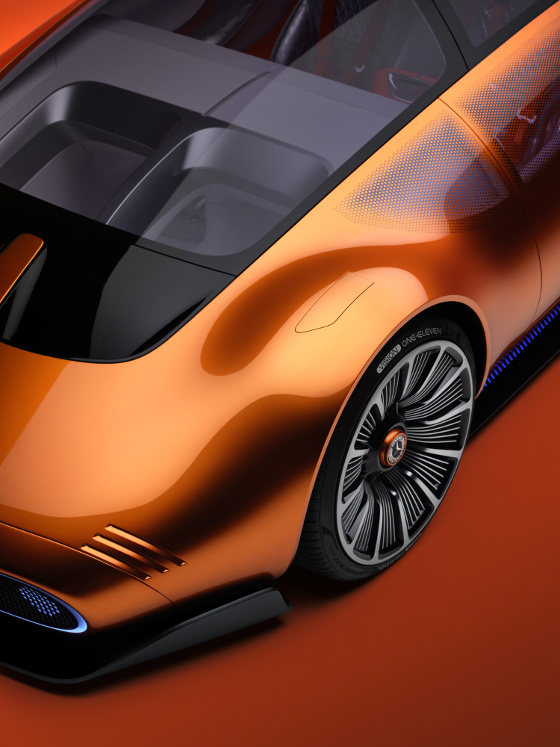
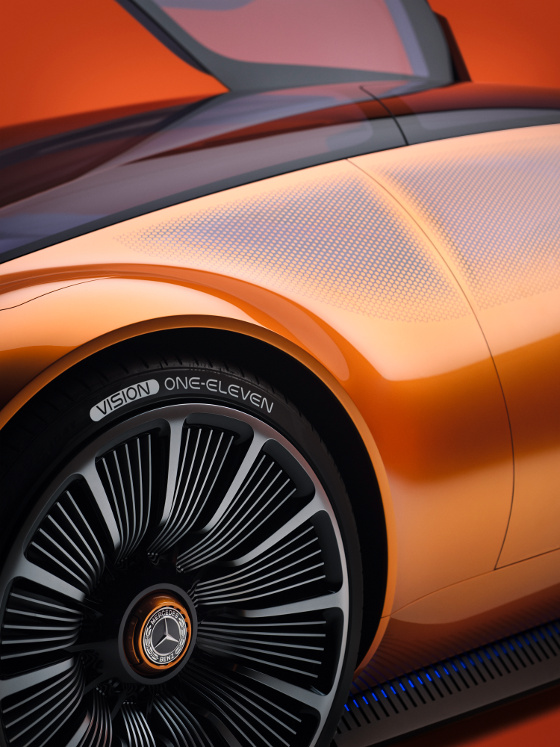
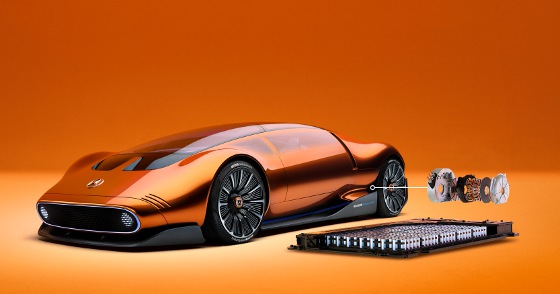
The body of the Mercedes-Benz Vision One-Eleven centers on its "One-Bow" design. From the low-slung front end to the muscular hind quarters, it runs in a smooth bow that gives the just-under-4-ft-high vehicle a silhouette with an extremely sculptural feel. The car's copper-orange Alubeam paintwork gives the vehicle a liquid-metal, color-changing vibe that is futuristic and still a little retro at the same time.
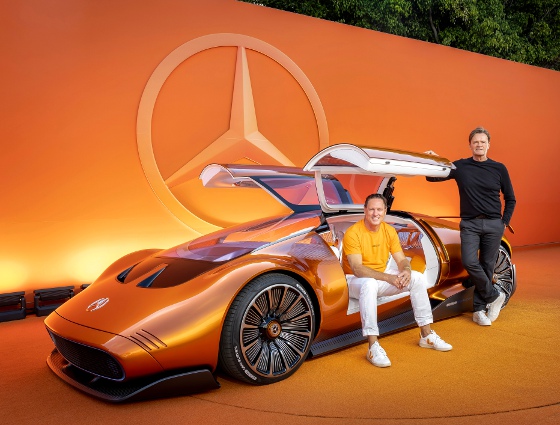
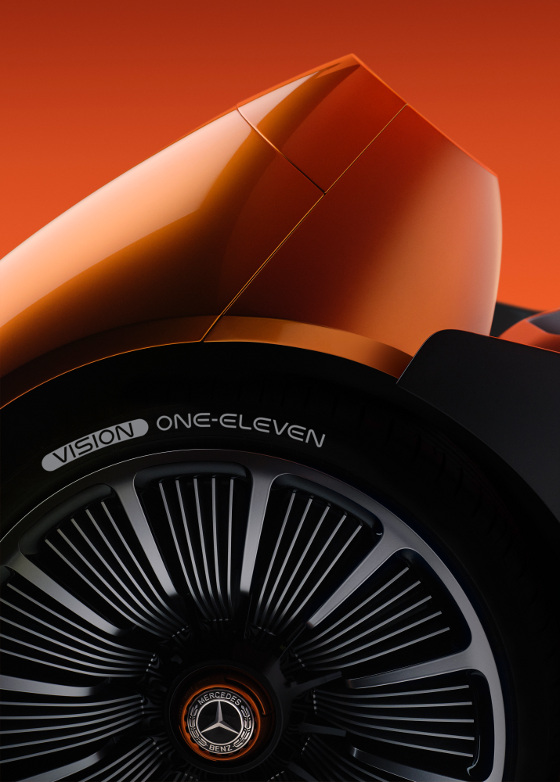
The Vision One-Eleven design includes flush-fit gullwing doors and side windows that are opaque from the outside and camouflaged by a pixelated pattern. It rides on large-diameter wheels inserted seamlessly into the wheel arches beneath voluminous flared wings. The wheel design incorporates structured elements evocative of electric motor windings, which is a cool hint to the world that this is an electric vehicle.
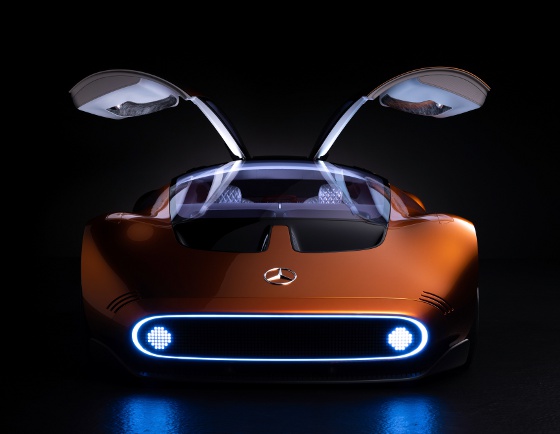
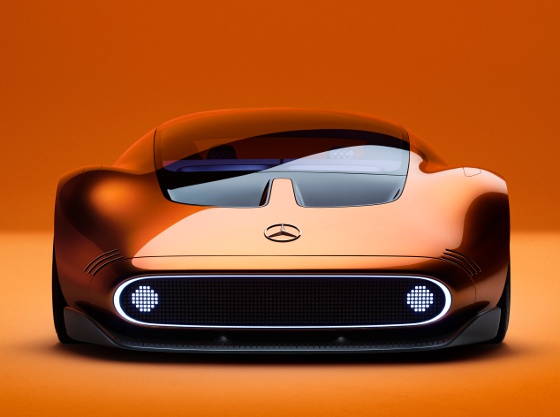
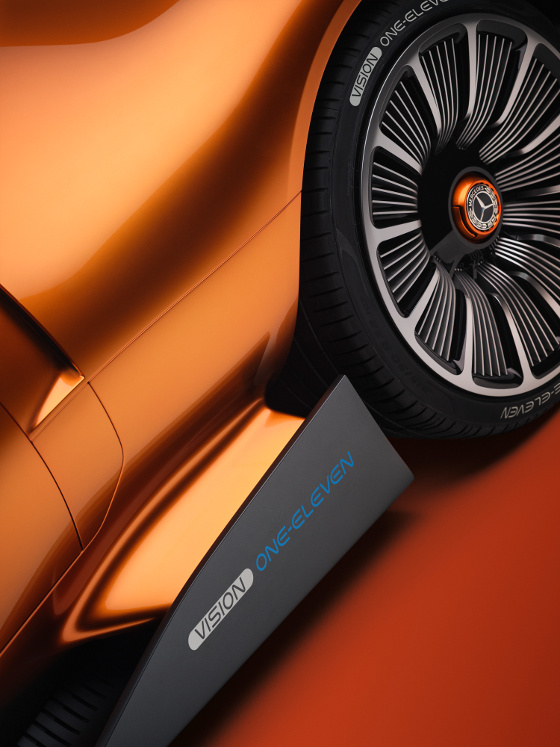
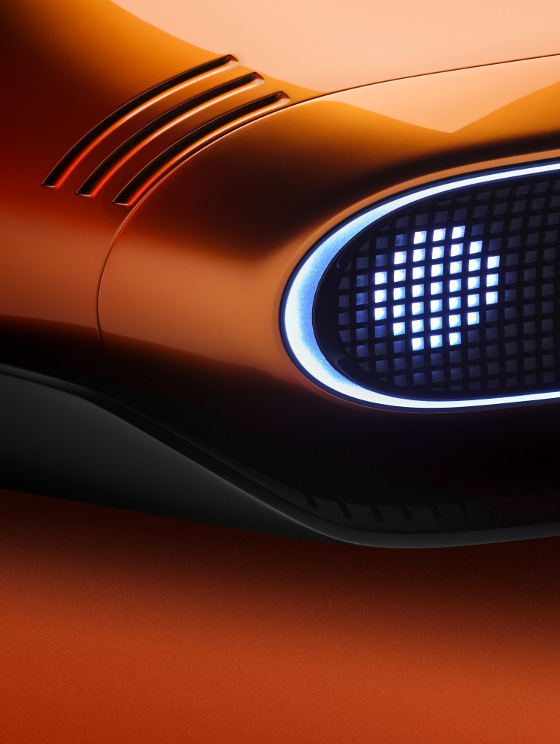
The car's very low-slung front and rear skirts are finished in matte black. The two deeply scooped aerodynamic elements are visually connected by two blade profiles in the same color running along the flanks beneath the sills. These profiles feature piercings that are backlit in blue. The functional aerodynamic elements also serve as a further design reference to the C 111, which is painted black on the lower portion of its bodyshell. The front panel is a flexible external display with a 3D pixelated look. It is a reference to the C 111's characteristic round lights in digitized form, but on this car it can also convey messages to other road users -- mayber even in news-ticker form.
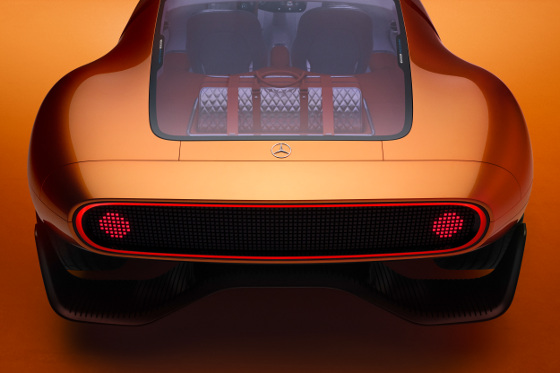
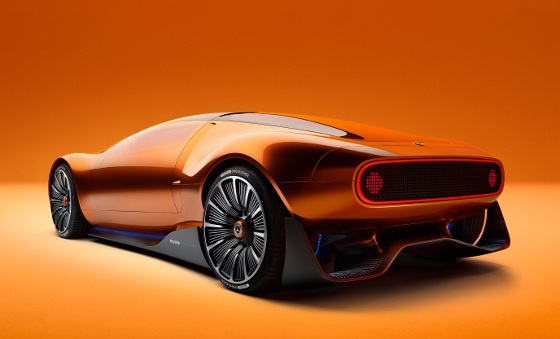
The rear end is dominated by a powerfully profiled diffuser. It features the same pixelated structure in the red taillights as the lights up front. Similar to the blade profiles along the sides, blue lighting effects are also visible at the rear, and the inner face of the wheels is fitted with circular lighting elements.
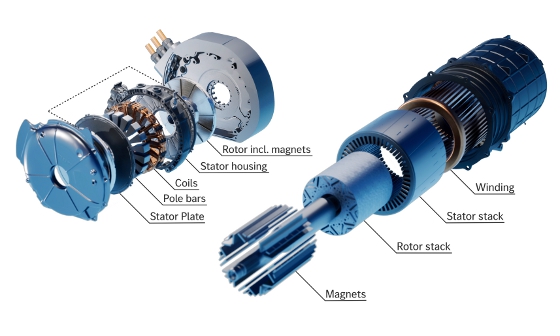
Technology highlights include a new battery concept featuring high-performance liquid-cooled cylindrical cells with a novel cell chemistry, much of it developed in concert with the motorsport experts at Mercedes-AMG High Performance Powertrain. The Vision One-Eleven also features two exceptionally powerful and advanced axial-flux motors from YASA, a Mercedes' UK-based subsidiary and partner for developing its next-generation electric drives. The future generation of YASA axial-flux motors for real-world cars will be produced at the Mercedes-Benz Berlin-Marienfelde plant.
"Axial-flux motors are significantly lighter and more compact, yet more powerful than comparable radial-flux motors currently used in 99% of all electric cars," said Tim Woolmer, founder and chief technology officer of YASA. "In an axial-flux motor, the electromagnetic flow runs parallel to the motor's rotational axis, which is highly efficient. In a radial-flux motor, the flow runs perpendicular to the rotational axis. Compared to radial-flux motors, they have considerably higher and more enduring power reserves, which delivers a whole new level of performance."
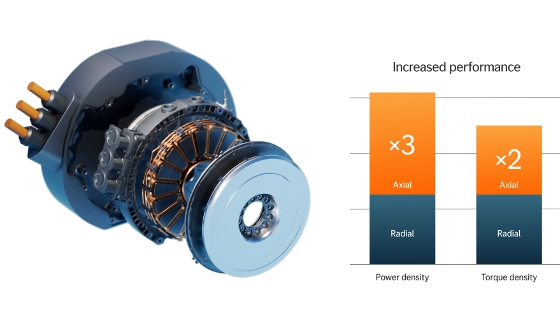
Alongside its power and torque density, another major benefit for the motor is the narrow package, which reduces both its weight and dimensions. The weight of an axial-flux motor is just one-third of that of current electric motors with the same power output. At the same time, it requires just one-third of the space occupied by a radial-flux motor. This opens up completely new options for engineers as well as new freedoms in the design of an electric vehicle as demonstrated by the Vision One-Eleven. However, Mercedes has not provided projected speed or horsepower numbers for the car.
VIDEO: From horsepower to powered by electric -- The new Vision One-Eleven. [Credit: Mercedes Benz]
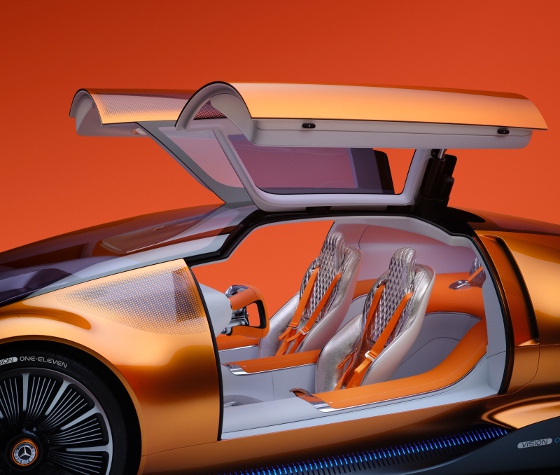
The car's inside is meant to evoke a roomy, minimalist, expensive lounge, although some may find that the white, orange, and silver mix has a bit of a cheesy look to it, like something from the set of "Buck Rogers in the 25th Century" from the 1980s. The seat cushions are integrated flush-fit into the floor, so owners will be cruising in an ultra-modern low-rider.
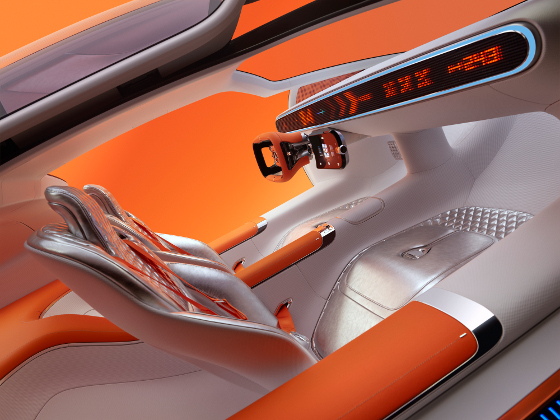
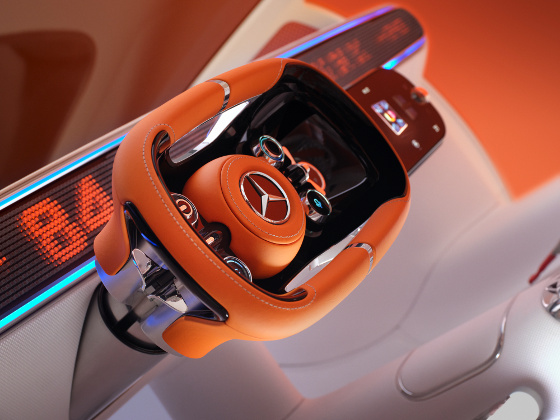
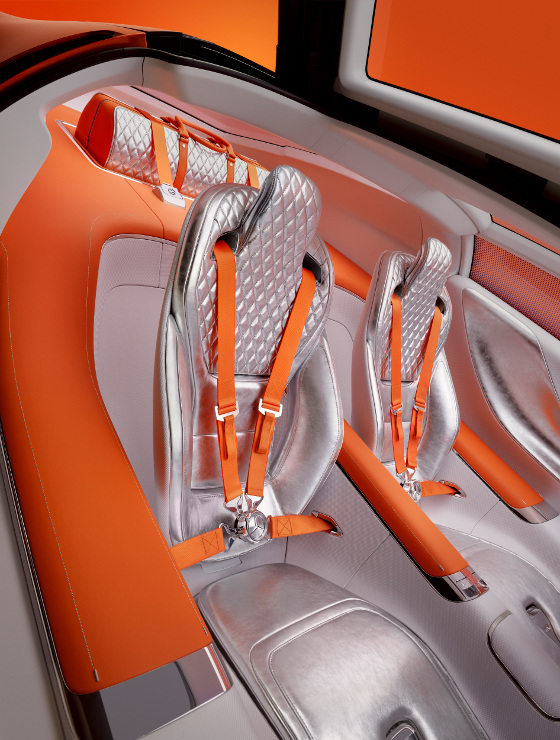
The only highly complex feature in the interior is the leather-clad steering wheel, which is fitted with various functional controls and state-of-the-art touch elements. This is complemented by a compact touchscreen with high-res display mounted to the side of the steering wheel and angled toward the driver.
Overall, the Vision One-Eleven is more than just a cool ride. Some elements will find their way into future Mercedes-Benz vehicles. It will be neat to see what makes it.
Source: Mercedes-Benz
Published June 2023
Rate this article
View our terms of use and privacy policy