 |
| March 18, 2025 | Volume 21 Issue 11 |
Motion Control News & Products

Designfax weekly eMagazine

Archives
Partners
Manufacturing Center
Product Spotlight
Modern Applications News
Metalworking Ideas For
Today's Job Shops
Tooling and Production
Strategies for large
metalworking plants
Simplify pick and place with the THK PPR
 THK's Pick-and-Place Robot PPR is a robot that can pick up delicate or minute workpieces such as electronic components and quickly and accurately transfer and assemble them to the base. In addition to the basic movements of raising, lowering, and rotating, various sensors (such as a force sensor), solenoid valves, and controller are all in one unit. The PPR is a process-optimized robot that can improve the production speed of the parts assembly processes and reduce work damage.
Learn more.
New ROBOMACHINE products and more from FANUC
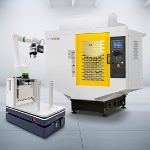 FANUC America demonstrated the future of manufacturing at IMTS 2026 last week, showcasing how Physical AI-powered automation integrates advanced CNC, machining, and robotics to boost productivity and speed deployment. One highlight was the debut of the ROBODRILL DC Series machining centers -- including the high-speed D54CS and D74CS models -- alongside interactive demonstrations featuring collaborative robots, robotic welding, material joining, painting, and assembly technology.
See all the FANUC new tech featured at IMTS.
What is a stick-slip bi-phase positioning stage?
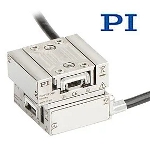 PI (Physik Instrumente) is expanding its Bi-Phase Inertia Drive (BIX) technology with new motor architectures for compact, high-precision nanopositioning applications. Based on the piezo stick-slip principle, BIX stages replace conventional single actuators with two synchronized multilayer piezo actuators. This compact design delivers precise, repeatable motion while maintaining piezo inertia self-locking.
Learn more about this technology.
Universal Robots unveils Gen 7 robot platform!
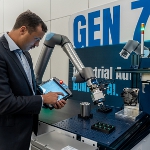 Redesigned from controller to tool flange, the new Gen 7 robot platform is out-of-the-box AI-ready, giving companies the modern software tools and next-level connectivity they need to confidently take AI from the lab into industrial operations. Gen 7 represents a unified system upgrade designed to make even the most demanding tasks and setups easier. See all the new features -- they are significant.
Read the full article.
Adaptor mount and hub options provide flexibility
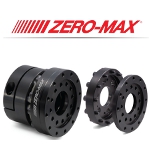 Zero-Max's new CD Power-Series Flexible Shaft Couplings feature ISO Flange Adaptors matching ISO 9409-1 patterns on gear reducers and robotics. Eliminating custom transitions, this direct connection enhances torsional stiffness and positioning accuracy while saving space, weight, and inertia. Offering continuous torque up to 65,000 in.-lb and versatile hub options, these compact couplings deliver high power density.
Learn more.
Top-shelf motors: Completely revised maxon catalog
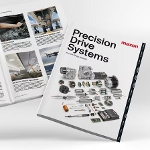 maxon has completely overhauled its 2026/2027 catalog, streamlining its portfolio to reduce complexity and improve navigation. The new structure features dedicated sections for business units -- Medical, Aerospace, Industrial Automation, Mobility -- and specialized fields like Robotics and Space. Key product highlights include new ECX PRIME and ECX FLAT motors, GSW planetary gearheads, and ESCON2/EPOS4 controllers.
Learn more and check it out.
Custom stators, rotors, and motor assemblies for low- to mid-volume applications
 Arnold's Ramco Electric Motors is your single partner for custom motor components and complete assemblies. Ramco builds solutions for AC induction, switched reluctance, and brushless DC designs up to 200+ HP. Capabilities include custom stators, rotor-shaft assemblies, aluminum and copper casting, induction brazing, permanent magnet assembly, and precision rotor balancing.
Learn more.
Rotate robot arms more than 600 degrees
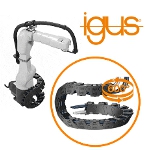 The unsupported twisterchain® from igus eliminates the need for additional trough systems or guide plates in robotic applications, especially in palletizing. This results in a clean, efficient, and space-saving system architecture that delivers both technical and economic advantages. Thanks to its specialized design, it supports rotations of over 600 degrees.
Learn more.
Match the torque of rotary solenoids to your application
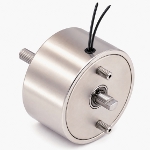 Magnetic Sensor Systems has launched the Made in USA R-10-200-CWM Series of clockwise rotary solenoids. Measuring 2.00 in. in diameter and 1.04 in. long with 18 different AWG options and a serrated front shaft end, these compact units optimize torque, current, and duty cycle. When power is removed, an integral return spring automatically returns the shaft to its home position. The shaft is supported by two high-precision radial ball bearings, providing smooth operation with no axial play. Applications include medical, security, and office equipment.
Learn more.
Planetary servo gear unit: New economy series
SEW-EURODRIVE has expanded its PxG planetary servo gear unit portfolio with the new PxG economy series, introducing the P1.G, P2.G, and P3.G performance classes. Designed for standard industrial automation applications like packaging and material handling, these cost-effective units feature peak torque ratings from 11 to 500 Nm and over 20,000 hours of service life, helping machine builders eliminate unnecessary over-specification.
Learn more.
Compact hexapod 6-DOF alignment system has overload protection
PI's compact H-811.I2HS hexapod delivers precise 6-DOF motion with patented overload protection, simplifying setup and operation in OEM applications. This built-in protection safeguards precision mechanics during installation and integration against accidental forces or improper handling. Furthermore, the hexapod mounts in any orientation, granting system designers exceptional flexibility for optical, photonics, microscopy, metrology, and automation systems.
Learn more.
What is STUDROLLER technology? Cross Roller Guides
NB SLIDE WAY cross roller guides use precision rollers to provide stable, non-recirculating linear motions in precision stages, inspection equipment, semiconductor manufacturing, and more. At the heart of all NB cross roller bearings is the STUDROLLER mechanism, which eliminates the cage-creep phenomenon that, over time, can create deviances in cross roller retainer performance. NB cross roller guides equipped with this system are more accurate and better performing than any other comparable products on the market today. High acceleration and faster cycle times are possible in any orientation.
View the video.
Ruggedized Nano servo drives for harsh environs
Copley Controls has released its R47 and R48 NanoPlus Micro Module servo drives. Designed for extreme environments and space-constrained applications, these rugged platforms operate from 9 to 180 VDC, delivering peak power up to 6.3 kW. Offering CANopen (R47) or EtherCAT (R48) communications, both feature STO SIL 3 safety and broad encoder support. Well suited for COTS military, nautical, aviation, oil refining, and vehicle-based systems.
Learn more.
Simplify AC motor control with the new OMRON M1 Inverter
The OMRON M1 Inverter simplifies machine design by unifying motion, safety, networking, and motor control into a single platform. Available in M1-STD, M1-ECT, and M1-EMP models, it controls IM and PM motors with high precision. Featuring SIL3 PLe STO safety and native EtherCAT, EtherNet/IP, or RS-485 communications, the M1 accelerates development within the Sysmac environment.
Learn more.
Flexible planetary gearheads: Quiet, extremely robust
FAULHABER GPT gearheads for miniature and micro motors deliver high power density, exceptional flexibility, and excellent cost efficiency. Designed for seamless integration with diverse motors and encoders, these compact planetary drives feature hardened stainless steel components that reliably withstand extreme torques and abrupt load changes. Offered in standard, low-noise, and high-torque variants, they ensure precise, durable performance across wide operating temperature ranges.
Learn more.
Inverted pyramid sensor paves the way for next-gen Hall-effect magnetic sensing
A team of researchers has developed a pioneering 3-axis Hall-effect magnetic sensor based on an inverted pyramid structure. This innovative design offers significant advancements in both sensitivity and offset reduction, positioning it as a promising solution for applications requiring precise and reliable magnetic field detection in automotive, industrial, and consumer electronics.
Magnetic sensors, especially Hall-effect sensors, are essential in a broad range of industries, from automotive and industrial systems to consumer electronics and medical devices. Despite their reliability and low cost, existing 3-axis Hall sensors face significant challenges, including limited sensitivity, large footprints, and high offsets. These limitations hinder their ability to meet the growing demands for miniaturization and precision in modern electronics. As devices continue to shrink and require more accurate magnetic sensing, the need for advanced solutions has never been greater.
In a new study published in Microsystems & Nanoengineering on Feb. 14, 2025, researchers from the Department of Microelectronics, Delft University of Technology (Netherlands) unveiled a novel 3-axis Hall-effect magnetic sensor with an inverted pyramid structure. Using a combination of micro-electromechanical systems (MEMS) micromachining and complementary metal-oxide semiconductor (CMOS) processing, the device can detect both in-plane and out-of-plane magnetic fields within a single compact structure. This sensor outperforms traditional Hall sensors by employing an innovative current-spinning method that reduces offset by one to three orders of magnitude, addressing a major challenge in magnetic field sensing.
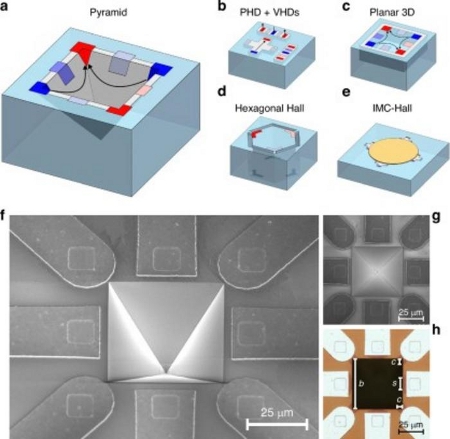
State-of-the-art and 3-axis pyramid device: (a) Pyramid Hall device; (b) A standard 3-axis Hall sensor, composed of one planar Hall device and two vertical Hall devices; (c) The flat 8-contact Hall device, proposed by Schott; (d) Sander's hexagonal prism Hall device; (e) An IMC Hall device; (f) SEM image of the pyramid device, with a tilting angle of 30 deg.; (g) SEM image of the pyramid device, with no tilting angle; (h) Optical microscope image of the sensor, with the pyramid size and contact dimensions highlighted. [Credit: Microsystems & Nanoengineering/Courtesy of Delft University of Technology]
The new sensor showcases exceptional performance, with high current-related sensitivity ranging from 64.1 to 198 V A-1 T-1 and voltage-related sensitivity between 14.8 and 21.4 mV V-1 T-1. It also boasts a low crosstalk rate of less than 4.7%, ensuring accurate readings. With a thermal noise floor of approximately 0.5 µT/√Hz, this sensor is ideal for high-precision applications such as position feedback, power monitoring, and robotic motion tracking.
Notably, the sensor's compact design integrates multiple sensing modes into a single structure, significantly reducing its footprint and improving isotropy compared to existing solutions. While the sensor demonstrates remarkable improvements, the residual offset remains in the millitesla range, signaling potential for further optimization.
Dr. Karen M. Dowling, a leading researcher on the project, said, "This novel sensor represents a significant step forward in magnetic sensing technology. By integrating an inverted pyramid structure with current-spinning, we have achieved remarkable improvements in sensitivity and offset reduction, paving the way for more precise and reliable magnetic field sensing."
As further refinements are made, this technology could revolutionize magnetic sensor integration in everyday devices, driving greater efficiency and reliability across multiple sectors.
Source: Delft University of Technology
Published March 2025
Rate this article
View our terms of use and privacy policy