 |
| May 27, 2025 | Volume 21 Issue 20 |
Mechanical News & Products

Designfax weekly eMagazine

Archives
Partners
Manufacturing Center
Product Spotlight
Modern Applications News
Metalworking Ideas For
Today's Job Shops
Tooling and Production
Strategies for large
metalworking plants
Siemens Meet at the Machine: Be productive from day one of new CNC machine delivery
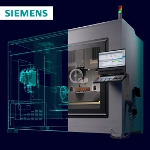 Traditionally, many programming, validation, and training activities begin only after a machine is installed. Not anymore. Meet at the Machine is Siemens' new initiative uniting machine builders, software, and automation for next-level CNC through a continuous digital thread across engineering, programming, virtual validation, and execution. By pairing a Digital Twin with Digital CNC powered by SINUMERIK, manufacturers can prepare, validate, train, and optimize workflows before your specialized machine's physical delivery! TRAK Machine Tools is the launch partner -- see what they are doing.
Learn more.
How to master metal powder management in 3D printing
 What's the real cost of "good enough" powder tracking for powder-bed fusion 3D-printing machines? According to Tim Wischeropp, CEO and Co-Founder of amsight, the technology is rife with hidden costs. Every cycle, every handling step, every exposure, and every mixing decision plays a part. Surprisingly, though, with the right strategy, users can turn their losses into a competitive edge. Learn how.
Read the full article.
Aluminum oxide filament for FDM printers
 Virtual Foundry, the company that brought us 3D-printable lunar regolith simulant, has a new product called Aluminum Oxide Filamet™, giving users the power to print alumina parts using the FDM printers they already own. This composite 3D-printing material allows researchers, engineers, and makers to bypass expensive ceramic tooling and produce pure ceramic components in-house. Print using a 0.6-mm hardened-steel, standard-flow nozzle on virtually any open-architecture printer.
Get all the material specs.
New metal extrusion retrofit system helps manufacturers get into ShAPE
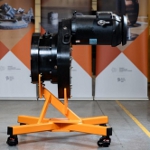 A new invention from the Department of Energy's Pacific Northwest National Laboratory could soon help manufacturers more easily adopt the lab's patented Shear Assisted Processing and Extrusion (ShAPE™) technology, enabling faster manufacturing of superior extrusion products while reducing costs and energy use.
Read the full article.
Pneumatics: Dual guide rod cylinders and exhaust silencers
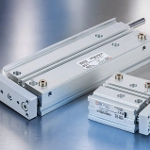 Automation-Direct has expanded its guided actuator lineup with compact 12-mm dual guide rod cylinders from Metal Work. Ideal for packaging and material handling, these double-acting cylinders feature 10-mm to 250-mm strokes, magnetic pistons, and integral sensor slots. Additionally, new durable acetal plastic silencers are now available in multiple NPT/BSPP sizes to reduce pneumatic exhaust noise.
Learn more.
Expanded injection molding capabilities
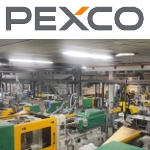 Pexco LLC has acquired Recto Molded Products and Legacy Extrusions, expanding its capabilities in complex injection molding, tooling, assembly, and engineered thermoplastic solutions for OEM manufacturers. The Cincinnati-based companies bring more than a century of manufacturing expertise, advanced production technologies, and value-added services that strengthen Pexco's ability to support customers from product design through full-scale production. Injection molding presses ranging from 55 to 500 tons.
Learn about Pexco and its value-added manufacturing services.
Custom 3D-printed steering wheel for jet dragster
 Jet dragsters use General Electric J85 engines -- the same turbines pulled from U.S. military F5 Freedom Fighters -- mounted to a custom 26-ft chassis. The racers achieve quarter-miles in 5.5 sec, but standard metal parts can fail custom ergonomic needs. Traditional manufacturing of low-volume aluminum steering wheels demands long, 8-day lead times, high costs, and multi-piece assemblies. Larsen Motorsports solved this by replacing metal with continuous fiber 3D printing using the Markforged X7. Embedding continuous carbon fiber into an Onyx nylon matrix allowed them to target specific load paths, delivering a custom steering wheel that is stiffer, lighter, and faster to produce than aluminum.
View the video.
Application Spotlight: Light-duty ring in an air vent nozzle
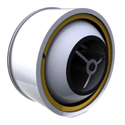 Explore how a light-duty Spirolox® retaining ring is used in an airplane air vent nozzle to regulate airflow. This application spotlight shows how the ring fits into a groove in the plastic housing, securing the nozzle during rotation. Designed for light loads and axial positioning, it offers a simple, economical solution that is easy to install and remove.
View this informative Smalley video.
Fasteners for automotive and agricultural equipment
 Norm Fasteners has acquired an automotive fastener manufacturing plant in Plymouth, MI, expanding its North American footprint beyond sales, engineering, and logistics. The local facility produces metric fasteners (M4-M24) and engine bolts. Norm’s portfolio includes wheel bolts, studs, custom fasteners, and licensed MAThread® and TAPTITE® products, serving diverse automotive and industrial assembly needs.
Learn more or contact Belgin Tunce
for more information.
3M Cooling Film for vehicle roofs launched
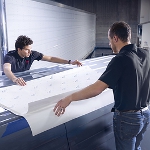 New 3M Cooling Film is a roof-applied heat-management solution designed to help keep vehicle cabins cooler, reduce cooling demand, and improve operational efficiency. The aftermarket product uses advanced thermal management technology to reflect more than 85% of solar radiation. Interior vehicle temperatures can be reduced by up to 10 degrees F with this product. Installs like graphics by professional installers using 3M adhesive technologies. Initially designed for fleet and rail operators.
Learn more.
Test your knowledge: High-temp adhesives
 Put your knowledge to the test by trying to answer these key questions on how to choose the right high-temperature-resistant adhesive. The technical experts from Master Bond cover critical information necessary for the selection process, including questions on glass transition temperature and service temperature range. Some of the answers may surprise even the savviest of engineers.
Take the quiz.
New Air Holster Safety Air Gun Mount
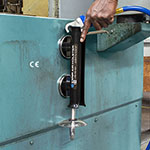 EXAIR's new Model 5930 Air Holster provides a simple and convenient way to keep Safety Air Guns secure and within easy reach at workstations throughout a facility. Designed to give operators a designated location for their air gun when not in use, the Air Holster helps prevent misplaced tools while keeping work areas organized and efficient. Its practical design makes it an ideal addition to manufacturing, assembly, maintenance, and other industrial workstations where Safety Air Guns are frequently used.
Learn more.
Southco access hardware in rail applications
 Discover how Southco's rail access hardware solutions help improve safety, reliability, and operational efficiency across modern rail networks. The video showcases a range of rail applications where Southco's access hardware plays a critical role, including driver cabins, lighting systems, tray tables, headrests, armrests, and other passenger and operator touchpoints. Designed to support dependable performance in demanding moving environments, Southco's solutions help operators streamline maintenance processes, minimize downtime, and enable more proactive asset management.
View the video.
Multi-zone tension leveler for hard-to-flatten alloys
 Redex USA's Levelflex® is a modular, multi-zone tension leveler engineered for continuous processing lines, including coating and heat treatment of aluminum alloys and where flatness is critical to coating adhesion and downstream formability. By stretching material within 95% of its yield strength, it corrects stubborn flatness defects in fewer passes. It comes in open-loop pure stretch or closed-loop tension measurement modes to optimize surface integrity and eliminate crossbow.
Learn more.
Hold any shape with ID and OD Form Holding Clamps
 These simple OD and ID clamping solutions from Fixtureworks clamp onto your part in one easy operation, eliminating the need for custom fixtures. They allow users to clamp onto the inner or outer diameter of small-size, irregularly shaped work parts fast. Lots of options.
Learn more.
3D printers leave hidden 'fingerprints' that reveal part origins
A new artificial intelligence system pinpoints the origin of 3D-printed parts down to the specific machine that made them. The technology could allow manufacturers to monitor their suppliers and manage their supply chains, detecting early problems and verifying that suppliers are following agreed-upon processes.
A team of researchers led by Bill King, a professor of mechanical science and engineering at the University of Illinois Urbana-Champaign, has discovered that parts made by additive manufacturing, also known as 3D printing, carry a unique signature from the specific machine that fabricated them. This inspired the development of an AI system that detects the signature, or "fingerprint," from a photograph of the part and identifies its origin.
"We are still amazed that this works: We can print the same part design on two identical machines --same model, same process settings, same material -- and each machine leaves a unique fingerprint that the AI model can trace back to the machine," King said. "It's possible to determine exactly where and how something was made. You don't have to take your supplier's word on anything."
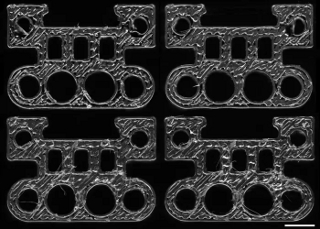
Four 3D-printed parts made on four different printers. A deep learning model can determine the source machine of each part. Scale bar is 5 mm. [Credit: Miles Bimrose/Courtesy of University of Illinois Grainger College of Engineering]
The results of this study were recently published in the Nature partner journal Advanced Manufacturing.
The technology has major implications for supplier management and quality control, according to King. When a manufacturer contracts a supplier to produce parts for a product, the supplier typically agrees to adhere to a specific set of machines, processes, and factory procedures and not to make any changes without permission. However, this provision is difficult to enforce. Suppliers often make changes without notice, from the fabrication process to the materials used. They are normally benign, but they can also cause major issues in the final product.
"Modern supply chains are based on trust," King said. "There's due diligence in the form of audits and site tours at the start of the relationship. But, for most companies, it's not feasible to continuously monitor their suppliers. Changes to the manufacturing process can go unnoticed for a long time, and you don't find out until a bad batch of products is made. Everyone who works in manufacturing has a story about a supplier that changed something without permission and caused a serious problem."
While studying the repeatability of 3D printers, King's research group noticed that the tolerances of part dimensions were correlated with individual machines. This inspired the researchers to examine photographs of the parts. It turned out that it is possible to determine the specific machine that made the part, the fabrication process, and the materials used -- the production "fingerprint."
"These manufacturing fingerprints have been hiding in plain sight," King said. "There are thousands of 3D printers in the world, and tens of millions of 3D-printed parts used in airplanes, automobiles, medical devices, consumer products, and a host of other applications. Each one of these parts has a unique signature that can be detected using AI."
King's research group developed an AI model to identify production fingerprints from photographs taken with smartphone cameras. The AI model was developed on a large data set, comprising photographs of 9,192 parts made on 21 machines from six companies and with four different fabrication processes. When calibrating their model, the researchers found that a fingerprint could be obtained with 98% accuracy from just 1 square millimeter of the part's surface.
"Our results suggest that the AI model can make accurate predictions when trained with as few as 10 parts," King said. "Using just a few samples from a supplier, it's possible to verify everything that they deliver after."
King believes that this technology has the potential to overhaul supply chain management. With it, manufacturers can detect problems at early stages of production, and they save the time and resources needed to pinpoint the origins of errors. The technology could also be used to track the origins of illicit goods.
Source: University of Illinois Grainger College of Engineering
Published May 2025
Rate this article
View our terms of use and privacy policy