 |
| September 23, 2025 | Volume 21 Issue 36 |
Designfax weekly eMagazine

Archives
Partners
Manufacturing Center
Product Spotlight
Modern Applications News
Metalworking Ideas For
Today's Job Shops
Tooling and Production
Strategies for large
metalworking plants
Reconfigurable batteries bend, tune their own voltage
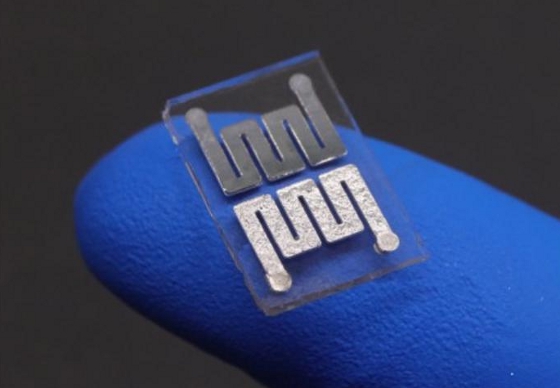
For the first time, scientists have fabricated multi-layer, reconfigurable batteries that can bend, adapt, and tune their own voltage -- offering a potential power source for future wearable devices, sensors, and soft robotics.
In International Journal of Extreme Manufacturing (IJEM), a research team led by Professor Lin Gui at the Institute of Physics and Chemistry, Chinese Academy of Sciences, reported the first fabrication of multi-layer flexible batteries using a combination of liquid metal microfluidic perfusion and plasma-based reversible bonding techniques.
The way traditional batteries are built makes them rigid and difficult to integrate into systems designed to bend, stretch, or twist. This new manufacturing method addresses these limitations by creating electrodes and connections that are not only flexible but also reconfigurable on demand.
"Unlike regular batteries, which are rigid and fixed in performance, our batteries allow the voltage to be regulated internally by adjusting microchannel structures. We don't need any additional external circuitry and increased design flexibility." said Prof. Gui.
At the core of the technology is the controlled infusion of a specially formulated gallium-tin-zinc alloy (Ga52.5Sn39.5Zn8) into microfluidic channels. This alloy provides both deformability and stability in alkaline environments, overcoming long-standing challenges in the use of liquid metals for energy storage. Multi-layer channel architectures further enable the stacking and reconfiguration of cells, while 3D printing allows precise adjustment of cell numbers and interconnections. The battery design also included Bi67In33 as the cathode and an alkaline hydrogel electrolyte.
According to the paper, "A variety of circuit structures are fabricated to realize the series-parallel integration of different numbers of single cells and achieve the fabrication of batteries with different voltages and powers, with a maximum open-circuit voltage (OCV) of 4.6 V and a maximum output power of 1.193 mW."
"Our approach combines liquid metal perfusion with reversible bonding techniques we developed earlier, so we can package the electrodes securely while maintaining full flexibility," said Prof. Gui. "Using a non-eutectic alloy gives both mechanical deformability and chemical stability in alkaline environments, which has been a big challenge in earlier liquid-metal battery designs."
Successful demonstrations of the new technology included fabricating the EGaIn-NaOH microfluidic switch to control LEDs and also a wristband with a flexible battery that successfully powered an LCD clock and a temperature sensor.
Potential applications are wide ranging -- from long-lasting, flexible power for wearable health monitors and soft sensors to biocompatible electronics and advanced soft robots. The researchers are now focused on improving corrosion resistance, refining microfluidic designs for more precise control, and miniaturizing the technology for integration into next-generation electronics.
By merging advances in materials science, microfluidics, and advanced manufacturing, this work points to a bold new direction for powering the flexible electronics of tomorrow.
Source: International Journal of Extreme Manufacturing
Published September 2025
Rate this article
View our terms of use and privacy policy