 |
| December 02, 2025 | Volume 21 Issue 45 |
Electrical/Electronic News & Products
Designfax weekly eMagazine

Archives
Partners
Manufacturing Center
Product Spotlight
Modern Applications News
Metalworking Ideas For
Today's Job Shops
Tooling and Production
Strategies for large
metalworking plants
High-capacity benchtop video measurement system
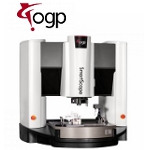 Optical Gaging Products has introduced the SmartScope® E18, a compact, benchtop video measurement system. Featuring a 12" x 12" stage, IntelliCentric™-E fixed-lens optics, and VIRTUAL ZOOM™ technology, it offers fully automatic 3-axis performance without taking up floor space. Standard LED lighting, a rigid fixed-bridge design, optional touch probes, and advanced metrology software ensure accurate, repeatable inspection.
Learn more.
Tech Tip: Fan selection - Why airflow is not just CFM
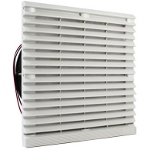 For many engineers, fan selection starts and ends with a single number: CFM (cubic feet per minute). Higher CFM feels like a clear win. More air moved must mean better cooling. However, in practice, this assumption is one of the most common causes of thermal problems, excess noise, and late-stage redesigns. Find out why.
Read this Orion Fans technical article.
Useful! Snap-together LED enclosure lighting
 Seifert StripLite SL 4000 Series LED enclosure lighting provides bright illumination to 700 lumens. On/off switch and motion sensor models are available. Easily daisy chain up to 16 light strips. Magnetic or clip mounting. See video/info on website or contact Bristol Instruments for more information.
Learn about snap-together lighting.
The hidden hardware helping AI's heat problem: PCHEs
 Across AI infrastructure, thermal constraints now connect semiconductor design with power and cooling systems. More compact, lighter, and efficient than conventional shell-and-tube models, printed circuit heat exchangers save floor space, reduce energy costs, and improve overall efficiency in dense, hyperscale environments.
Read the full article.
Nearly 1,000 parts: Industrial enclosure range expanded
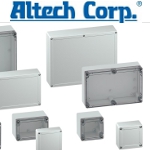 Altech Corp. has expanded its industrial enclosure lineup to 10 unique series with nearly 1,000 parts! Designed for control, junction, and terminal applications, these plastic and aluminum housings offer up to IP69 protection. They mount directly to walls or panels, resisting chemicals, corrosion, flames, impacts, and severe outdoor conditions without sacrificing aesthetics.
Find your perfect enclosure today.
Cool Tools: MetraSCAN BLACK2 -- Next-gen shop-floor 3D inspection
 You'll gain some superhero powers when you brandish FARO CREAFORM's new MetraSCAN BLACK2, a next-gen portable metrology-grade optical 3D scanner engineered to deliver total inspection flexibility on the shop floor. This unit boasts a 3-in-1 architecture that combines C-Track scanning, stand-alone scanning, and probing in a single metrology-grade system.
Read the full article.
Compact, touchless position sensors: Wear-free operation in tight spaces
Novotechnik's TFD-4000 Series of touchless linear position sensors delivers wear-free measurement in tight spaces. Featuring ranges up to 50 mm, IP67 protection, 12-bit resolution, and analog outputs, these reliable sensors operate from -40 C to 125 C across diverse industrial, mobile, and medical applications such as short-stroke linear valve positioning, solenoid valves, off-highway brake actuation, and more.
Learn more.
World's first 10-m safety laser scanner: See farther, protect more
Datasensing, Datalogic's Sensor & Safety and Machine Vision business unit, has launched the SLS10 Safety Laser Scanner, the world's first 10-meter safety laser scanner. Delivering a 275-degree scanning angle, 240-m2 of coverage, and an 84-msec response time, the SLS10 protects larger workspaces with fewer devices. It features best-in-class angular resolution for precise AGV navigation, SIL-2/PLd compliance, dust immunity, and the new ONEGUI platform for simplified configuration.
Learn more and see it in action.
Accelerate AI-driven machine vision systems
BitFlow has announced full production of its Claxon CXP-12 frame grabbers, designed for NVIDIA GPU-accelerated machine vision. Across five models, the CoaXPress 2.0 lineup delivers up to 50 Gbps -- five times 10 GigE Vision -- eliminating data bottlenecks. The full CXP-12 specification ensures deterministic, high-bandwidth streaming to unleash modern AI inference models.
Learn more.
Millimeter-wave imaging inspection in real time
With its new quality and inspection R&S IMAGER millimeter-wave scanner, Rohde & Schwarz aims to simplify the industrial inspection of packaged products. The system sees through common packaging materials at production speed without using X-rays, protecting both products and operators. The high-contrast 3D images are used as digital twins and can be automatically integrated into AI-powered fault-detection systems. Sees through plastics, cardboard, and composites. Applications include food and beverage, pharmaceuticals, logistics.
Learn more.
What are single-loop process controllers?
PLCs are powerful, but complex control isn't always necessary. For standalone processes requiring single-variable monitoring -- like temperature, pressure, or flow -- a single-loop controller is ideal. See how single-loop controllers can streamline your next project.
Read the AutomationDirect tech tip.
Great Resources: Flexible circuit design guide
Tech-Etch uses advanced techniques to manufacture flex and rigid-flex circuits to exacting customer specs. Special processes include selective plating a single circuit with two different finishes, contoured circuits with variable metal thickness, semi-additive and subtractive techniques, open window or cantilevered contact leads, plus SMT for component assembly. Tech-Etch specializes in flexible circuits for medical, telecommunications, aerospace, semiconductor, and other high-reliability electronic applications.
Learn about flex circuits and get the guide (no registration required).
EMI Investigations: New immunity development system
Saelig Company announces the Langer E1 Immunity Development System for EMI investigations. This compact, affordable kit simulates burst and ESD interference to pinpoint layout weak spots down to IC pins. By eliminating "black box" guesswork early in development, engineers can efficiently identify coupling mechanisms, test measures, and resolve immunity issues before compliance failure.
Learn more and see it in action.
Battery packs for unmanned aerial vehicles
Re:Build Manufacturing has launched U.S.-assembled, NDAA-compliant lithium-ion battery packs for commercial, public safety, and defense UAV applications. Available in Core, Power, and Performance series, the packs use non-FEOC cells and are produced at Re:Build's advanced facility in New Kensington, PA. Re:Build also offers custom pack and battery management system development.
Learn more.
Easy-to-use precision measurement system
Optical Gaging Products has announced the StarLite S1, a compact, semi-automatic 3-axis video measurement system. It combines fully automatic video measurements with manual stage motion and features an IntelliCentric-S optical system for high-resolution images. Powered by Measure-X software, this system delivers fast, repeatable, high-accuracy results, making it ideal for both shop-floor and quality-control applications.
Learn more.
Hardware vulnerability allows attackers to hack AI training data
By Matt Shipman, North Carolina State University
Researchers from NC State University have identified the first hardware vulnerability that allows attackers to compromise the data privacy of artificial intelligence (AI) users by exploiting the physical hardware on which AI is run.
"What we've discovered is an AI privacy attack," says Joshua Kalyanapu, first author of a paper on the work and a Ph.D. student at North Carolina State University. "Security attacks refer to stealing things actually stored somewhere in a system's memory -- such as stealing an AI model itself or stealing the hyperparameters of the model. That's not what we found. Privacy attacks steal stuff not actually stored on the system, such as the data used to train the model and attributes of the data input to the model. These facts are leaked through the behavior of the AI model. What we found is the first vulnerability that allows successfully attacking AI privacy via hardware."
The vulnerability is associated with "machine learning (ML) accelerators," hardware components on computer chips that increase the performance of machine-learning models in AI systems while reducing the models' power requirements. Machine learning refers to a subset of AI models that use algorithms to identify patterns in training data, then use those patterns to draw conclusions from new data.
Specifically, the vulnerability allows an attacker with access to a server that uses the ML accelerator to determine what data was used to train AI systems running on that server and leak other private information. The vulnerability, named GATEBLEED, works by monitoring the timing of software-level functions taking place on hardware, bypassing state-of-the-art malware detectors. The finding raises security concerns for AI users and liability concerns for AI companies.
"The goal of ML accelerators is to reduce the total cost of ownership by reducing the cost of machines that can train and run AI systems," says Samira Mirbagher Ajorpaz, corresponding author of the paper and an assistant professor of electrical and computer engineering at NC State.
"These AI accelerators are being incorporated into general-purpose CPUs used in a wide variety of computers," says Mirbagher Ajorpaz. "The idea is that these next-generation chips would be able to switch back and forth between running AI applications with on-core AI accelerators and executing general-purpose workloads on CPUs. Since this technology looks like it will be in widespread use, we wanted to investigate whether AI accelerators can create novel security vulnerabilities."
For this study, the researchers focused on Intel's Advanced Matrix Extensions, or AMX, which is an AI accelerator that was first incorporated into the 4th Generation Intel Xeon Scalable CPU.
"We found a vulnerability that effectively exploits the exact behaviors that make AI accelerators effective at speeding up the execution of AI functions while reducing energy use," says Kalyanapu.
"Chips are designed in such a way that they power up different segments of the chip depending on their usage and demand to conserve energy," says Darsh Asher, co-author of the paper and a Ph.D. student at NC State. "This phenomenon is known as power gating and is the root cause of this attack. Almost every major company implements power gating in different parts of their CPUs to gain a competitive advantage."
"The processor powers different parts of on-chip accelerators depending on usage and demand; AI algorithms and accelerators may take shortcuts when they encounter data sets on which they were trained," says Farshad Dizani, co-author of the paper and a Ph.D. student at NC State. "Powering up different parts of accelerators creates an observable timing channel for attackers. In other words, the behavior of the AI accelerator fluctuates in an identifiable way when it encounters data the AI was trained on versus data it was not trained on. These differences in timing create a novel privacy leakage for attackers who have not been granted direct access to privileged information."
"So, if you plug data into a server that uses an AI accelerator to run an AI system, we can tell whether the system was trained on that data by observing fluctuations in the AI accelerator usage," says Azam Ghanbari, an author of the paper and a Ph.D. student at NC State. "And we found a way to monitor accelerator usage using a custom program that requires no permissions."
"In addition, this attack becomes more effective when the networks are deep," says Asher. "The deeper the network is, the more vulnerable it becomes to this attack."
"And traditional approaches to defend against attacks don't appear to work as well against this vulnerability, because other attacks rely on outputs from the model or reading power consumption," says Mirbagher Ajorpaz. GATEBLEED does neither. "Rather, GATEBLEED is the first vulnerability to exploit hardware to leak user data privacy by leveraging the interaction between AI execution and accelerator power-gating states," Mirbagher Ajorpaz says. "Unlike software vulnerabilities, hardware flaws cannot simply be patched with an update. Effective mitigation requires hardware redesign, which takes years to propagate into new CPUs. In the meantime, microcode updates or operating system (OS)-level defenses impose heavy performance slowdowns or increased power consumption, both of which are unacceptable in production AI deployments.
"Moreover, because hardware sits beneath the OS, hypervisor, and application stack, a hardware attack like GATEBLEED can undermine all higher-level privacy guarantees -- regardless of encryption, sandboxing, or privilege separation," Mirbagher Ajorpaz says. "Hardware vulnerabilities thus open a fundamentally new channel for AI user data privacy leakage, and it bypasses all existing defenses designed for AI inference attacks."
The ability to identify the data an AI system was trained on raises a number of concerns for both AI users and AI companies.
"For one thing, if you know what data an AI system was trained on, this opens the door to a range of adversarial attacks and other security concerns," Mirbagher Ajorpaz says. "In addition, this could also create liability for companies if the vulnerability is used to demonstrate that a company trained its systems on data it did not have the right to use."
The vulnerability can also be used to give attackers additional information about how an AI system was trained.
"Mixtures of Experts (MoEs), where AI systems draw on multiple networks called 'experts,' are becoming the next AI architecture -- especially with new natural language processing models," Mirbagher Ajorpaz says. "The fact that GATEBLEED reveals which experts responded to the user query means that this vulnerability leaks sensitive private information. GATEBLEED shows for the first time that MoE execution can leave a footprint in hardware that can be extracted. We found a dozen such vulnerabilities on the deployed and popular AI codes and modern AI agent designs across popular machine-learning libraries used by a variety of AI systems (HuggingFace, PyTorch, TensorFlow, etc.). This raises concerns regarding the extent to which hardware design decisions can affect our everyday privacy, particularly with more and more AI applications and AI agents being deployed."
"The work in this paper is a proof-of-concept finding, demonstrating that this sort of vulnerability is real and can be exploited even if you do not have physical access to the server," Mirbagher Ajorpaz says. "And our findings suggest that, now that we know what to look for, it would be possible to find many similar vulnerabilities. The next step is to identify solutions that will help us address these vulnerabilities without sacrificing the benefits associated with AI accelerators."
The paper, "GATEBLEED: A Timing-Only Membership Inference Attack, MoE-Routing Inference, and a Stealthy, Generic Magnifier Via Hardware Power Gating in AI Accelerators," was presented at the IEEE/ACM International Symposium on Microarchitecture (MICRO 2025) this past October in Seoul, South Korea. The paper was co-authored by Darsh Asher, Farshad Dizani, and Azam Ghanbari, all of whom are Ph.D. students at NC State; Aydin Aysu, an associate professor of electrical and computer engineering at NC State; and by Rosario Cammarota of Intel.
Published December 2025
Rate this article
View our terms of use and privacy policy