 |
| October 20, 2026 | Volume 22 Issue 39 |
Designfax weekly eMagazine
Archives
Partners
Manufacturing Center
Product Spotlight
Modern Applications News
Metalworking Ideas For
Today's Job Shops
Tooling and Production
Strategies for large
metalworking plants
Porsche Mission S supercar: First look
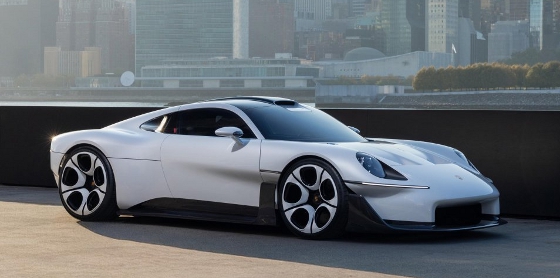
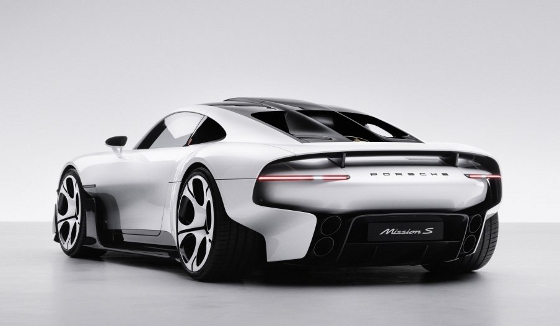
Porsche Mission S. [Credit: All images courtesy of Porsche]
Standing on a pier in Queens, New York, with the Manhattan skyline shimmering across the East River, Porsche just offered a bold look at its future. The setting wasn't accidental. In 1953, photos of the legendary mid-engined Porsche 550 Spyder taken on this exact pier introduced the world to the sports car that established the brand's identity and cemented its American success. Recently, Porsche returned to those historic grounds to unveil the Mission S -- a concept model that reinterprets the essence of the sports car while previewing an evolved design identity.
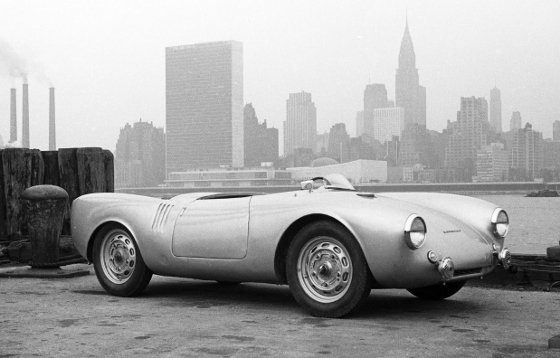
Porsche 550 Spyder, New York City, 1953, Porsche AG.
Created as part of Porsche's "Sportwagenschmiede 35" strategic realignment, the Mission S is more than a mere design exercise. It introduces a brand-new mid-engined super sports car platform positioned permanently above the iconic 911. As Dr. Michael Leiters, Chairman of the Executive Board of Porsche AG, explained, "The Mission S provides a glimpse of the ideas and design features that will shape Porsche in the coming years ... not as a one-off hypercar, but as a permanent and versatile addition to our customer offering."
Evolution via heritage: Exterior design
Tobias Sühlmann, Head of Style, Porsche, described the brand's future direction in three core words: authentic, consequent, and timeless.
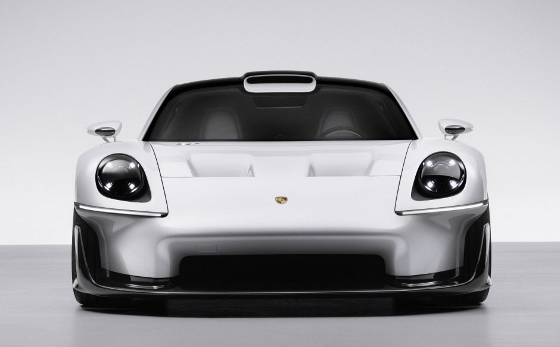
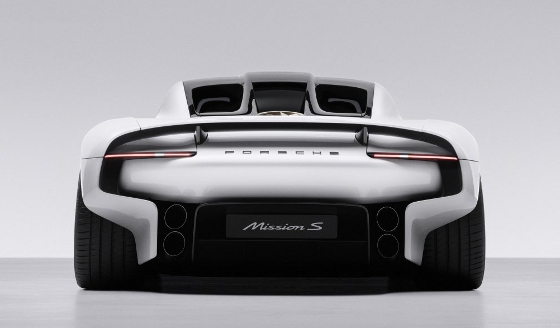
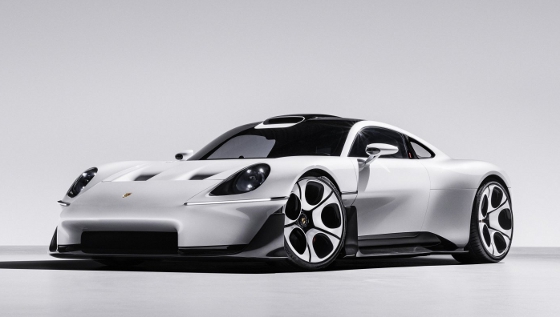
The Mission S translates iconic Porsche proportions into a forward-looking, highly sculptural stance. The vehicle relies on what Porsche calls "floating volumes" -- flowing surfaces and dynamic width-to-height ratios that make the car look light yet muscular. A continuous wraparound shoulder line divides the exterior into two distinct zones: the upper body emphasizes athletic, sculpted curves, while the lower section exposes technical lightweight construction and functional aerodynamics.
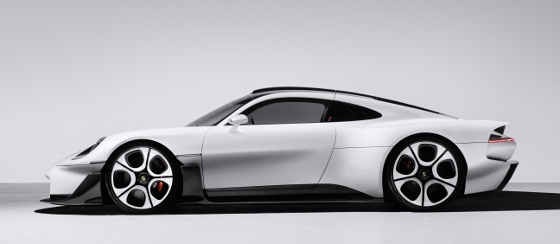
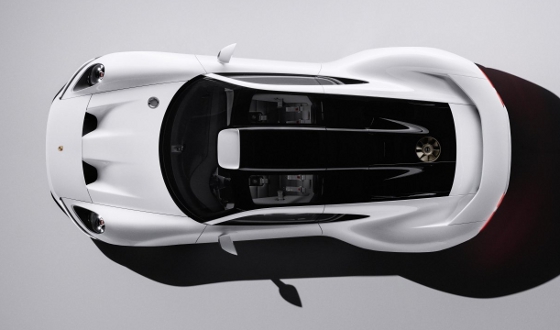
Look closely, and a masterclass in Porsche lineage reveals itself:
- The front and fenders: Classic round headlights and sweeping "torpedo" fenders pay direct homage to the 911, while the flat nose draws inspiration from the 911 GT1.
- The body lines: The shut lines merging into the light graphics recall the iconic G-Series 911 (1974-1989).
- The roof and rear: Beneath the rear wing, the roofline stretches back to the tail -- a nod to the 959 -- while the rear features a contemporary "car-in-car" structural design derived from the GT1.
- Functional details: Central mid-engine proportions enable the signature Porsche flyline, cooled by a solution inspired by the legendary 917 racer's radiator fan.
- Lightweight wheels: The wheel concept takes the dial design of the front-engine 928 and reengineers it for modern lightweight performance.
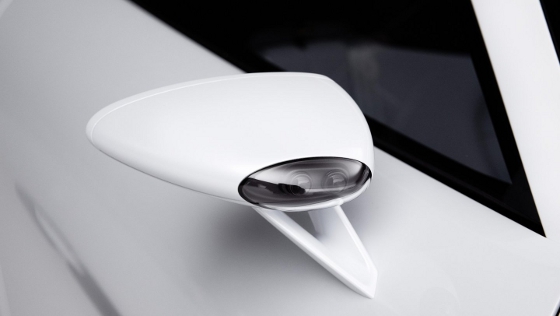
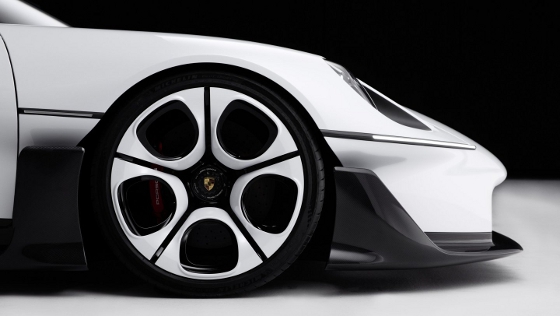
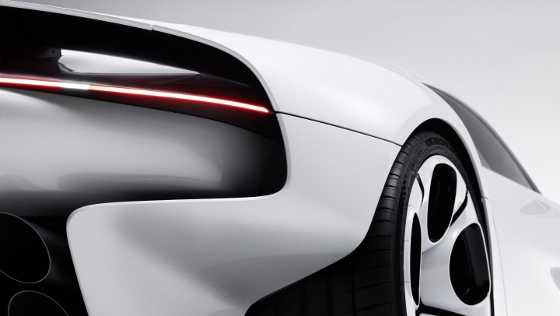
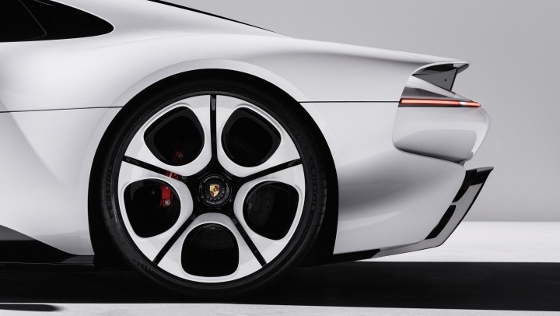
To finish the look, Porsche developed a dedicated motorsport-inspired color palette: Firn White Metallic, Light Red Metallic, Black Chrome, and interior Special Black.
Radical purism: The driver-centric interior
Inside, the Mission S strips away modern digital clutter to focus purely on the driver. Drawing ergonomic inspiration from early racers like the 356 and 550 Spyder, two clean structural lines sweep across the dashboard and doors, creating a low-slung, cocooned seating position.
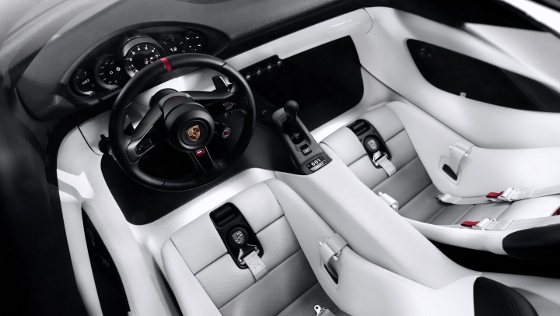
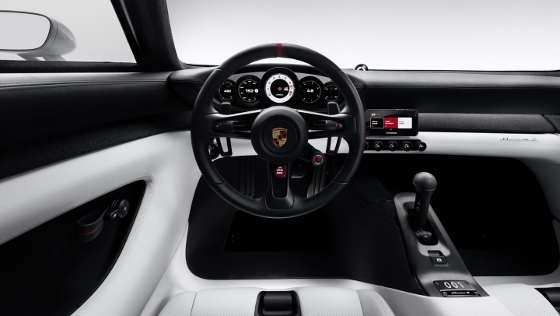
Rather than dotting the cabin with oversized touchscreens, Porsche deliberately eliminated both the central display and passenger screen. In their place is a sleek, retractable MagSafe smartphone dock that allows the driver's device to handle navigation via a streamlined My Porsche App.
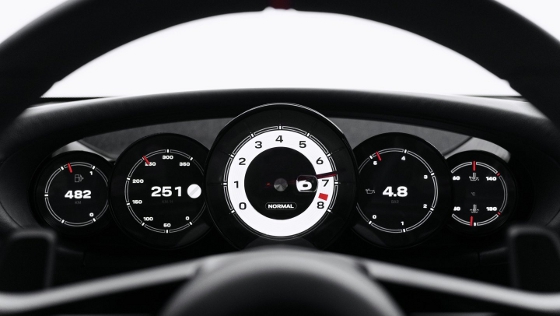
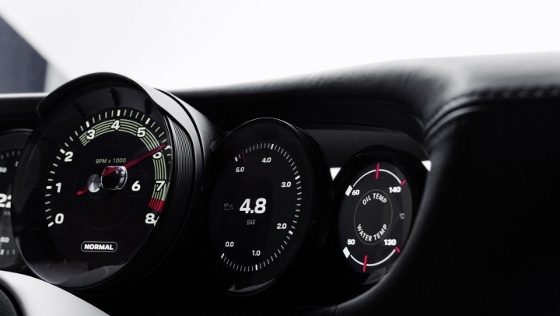
Key interior and driver-experience highlights include:
- Adaptive 5-tube cluster: A traditional five-gauge setup sits behind the steering wheel, anchored by a central mechanical tachometer needle over a digital backing. Depending on the driving mode, the instrument tubes shift alignment and physically extend closer to the driver.
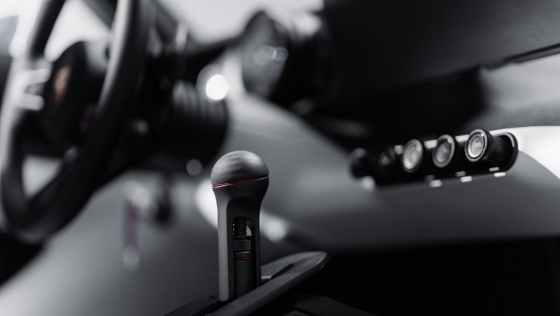
- Analogue precision: Tactile push-pull controls line the dashboard, paired with a reimagined Sport Chrono module that blends physical mechanisms with digital accuracy.
- Porsche DNA touches: The key holder remains strictly to the left of the steering wheel. Meanwhile, racing-derived bucket seats feature electric adjustment switches repositioned for better ergonomics and integrated seatbelt buckles built into the center panel.
The Porsche Mission S bridges seven decades of racing heritage with the next era of super sports car engineering. By grounding its future in authentic design cues -- from 550 Spyder proportions to 917 cooling solutions -- Porsche demonstrates that true innovation doesn't mean abandoning your roots. As this mid-engined platform transitions from vision model to production reality, one thing remains clear: Driving emotion remains the top priority in Weissach.
How fast will it go? What are the engine specs? What else will the car include, and how much will it cost? We will have to be patient for now until Porsche releases more details. Can we get a special woohoo, though, that this supercar will be a combustion engine offering? Reports say that Porsche ruled out an all-electric option for this model because of a lack of market demand. Woohoo!
Source: Porsche
Published October 2026
Rate this article
View our terms of use and privacy policy