 |
| September 09, 2014 | Volume 10 Issue 34 |
Motion Control News & Products

Designfax weekly eMagazine
Archives
Partners
Manufacturing Center
Product Spotlight
Modern Applications News
Metalworking Ideas For
Today's Job Shops
Tooling and Production
Strategies for large
metalworking plants
OnRobot launches 2FGP20 Fork electric gripper for challenging palletizing applications
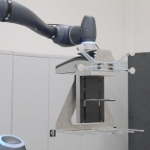 OnRobot has launched the 2FGP20 Fork, a standardized, all-electric fork palletizing gripper designed specifically for open boxes, display boxes, and other low-rigidity boxes. It is the first globally available, out-of-the-box tool for these often-challenging packaging types.
Read the full article.
Say goodbye to circular motion limits
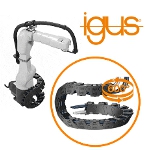 The igus twisterchain® delivers ultra-smooth 360-degree+ rotary and spiral movement for high loads at speeds over 1 m/s. Engineered with a modular, cable-friendly design and guided trough technology, it is lab tested to 1M+ cycles. Maximum strength, ultimate flexibility, and built to handle your toughest rotating applications with ease. The unsupported twisterchain is perfect for the robot base of small industrial robots.
Learn more.
How to: Multiplexed control of closed-loop piezo actuators
 Piezoelectric actuators are widely used in adaptive optics because they combine high positioning resolution, stiffness, fast response, useful stroke, and mechanical robustness. The challenge comes when the number of actuators increases. Learn how a research team at PI developed and tested a multiplexed system for closed-loop operation, with a focus on the factors that limit its performance.
Read this informative PI technical article.
Next-gen smart servos with higher performance
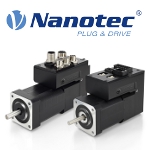 Nanotec's next-gen PD2 smart servos integrate a NEMA 17 motor, controller/drive, and absolute encoder into a compact unit. Offering up to 75% higher rated torque in stepper and BLDC versions, they feature FOC, EtherCAT, and IP65 protection. Applications include packaging machinery, laboratory automation, medical tech, semiconductor manufacturing, intralogistics, and printing equipment.
Learn more.
Meet Hevi-Rail: The heavy-duty roller bearing system
 Hevi-Rail is a cost-effective, heavy-duty linear bearing system designed for medium- to low-precision applications. Easy to mount and align, its hardened steel components evenly disperse forces to handle loads up to 60 tons. Offering high radial and axial capacities, it excels under continuous use in harsh environments like foundries and construction sites.
Learn more and see Hevi-Rail in action.
NORD expands compact VFD family up to 200 hp
 NORD DRIVE-SYSTEMS' NORDAC PRO SK 500P VFD series now powers up to 200 hp with multi-protocol Ethernet, integrated functional safety, and wireless diagnostics. Its compact design reduces cabinet space and costs across applications such as airport baggage handling, intralogistics, bulk material handling, and packaging. Advanced variants deliver precise control, online parameterization, and free NORDCON diagnostic software.
Learn more and get all the options and specs.
How to maximize and optimize stepper motor control
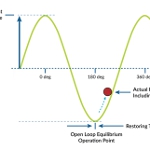 Engineers from PMD take a comprehensive look at how to control two-phase stepper motors, beginning with the basics (operations, strengths, and weaknesses) and moving on to traditional and updated advanced techniques for control including closed loop. A very thorough presentation.
Read the Performance Motion Devices technical article.
ABB Baldor-Reliance washdown motors: 40 years of durability
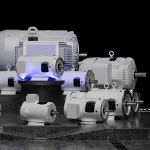 Celebrating four decades of washdown excellence, ABB's Baldor-Reliance line expands to include White Washdown models up to 150 hp with NEMA Premium efficiency. From cast iron to stainless steel, this complete portfolio -- including paint-free options -- delivers rugged, high-horsepower reliability. Power your processing operations with unmatched durability engineered specifically for demanding, wet, and humid environments.
Learn more.
Cobots get 4 m tall with the 8th-Axis Vertical Robot Transfer Unit
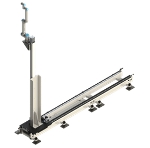 Designed to optimize industrial processes across various sectors, the 8th-Axis Vertical Robot Transfer Unit (RTU-V) from Bishop-Wisecarver features a vertical travel length of up to 4 m, enabling a single small robot or cobot to cover large areas traditionally requiring multiple robots. This innovation not only boosts productivity but also offers considerable cost savings, making it an ideal solution for industries such as logistics, manufacturing, agriculture, packaging, and more. Extended reach allows robots to perform tasks on oversized workpieces, such as rocket tubes, boat hulls, and aerospace structures, with ease.
View the video.
Simplify pick and place with the THK PPR
 THK's Pick-and-Place Robot PPR is a robot that can pick up delicate or minute workpieces such as electronic components and quickly and accurately transfer and assemble them to the base. In addition to the basic movements of raising, lowering, and rotating, various sensors (such as a force sensor), solenoid valves, and controller are all in one unit. The PPR is a process-optimized robot that can improve the production speed of the parts assembly processes and reduce work damage.
Learn more.
New ROBOMACHINE products and more from FANUC
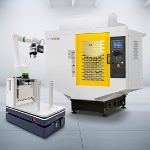 FANUC America demonstrated the future of manufacturing at IMTS 2026 last week, showcasing how Physical AI-powered automation integrates advanced CNC, machining, and robotics to boost productivity and speed deployment. One highlight was the debut of the ROBODRILL DC Series machining centers -- including the high-speed D54CS and D74CS models -- alongside interactive demonstrations featuring collaborative robots, robotic welding, material joining, painting, and assembly technology.
See all the FANUC new tech featured at IMTS.
What is a stick-slip bi-phase positioning stage?
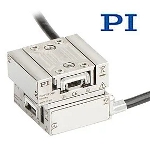 PI (Physik Instrumente) is expanding its Bi-Phase Inertia Drive (BIX) technology with new motor architectures for compact, high-precision nanopositioning applications. Based on the piezo stick-slip principle, BIX stages replace conventional single actuators with two synchronized multilayer piezo actuators. This compact design delivers precise, repeatable motion while maintaining piezo inertia self-locking.
Learn more about this technology.
Universal Robots unveils Gen 7 robot platform!
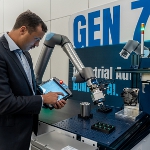 Redesigned from controller to tool flange, the new Gen 7 robot platform is out-of-the-box AI-ready, giving companies the modern software tools and next-level connectivity they need to confidently take AI from the lab into industrial operations. Gen 7 represents a unified system upgrade designed to make even the most demanding tasks and setups easier. See all the new features -- they are significant.
Read the full article.
Adaptor mount and hub options provide flexibility
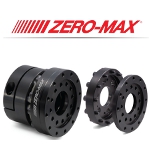 Zero-Max's new CD Power-Series Flexible Shaft Couplings feature ISO Flange Adaptors matching ISO 9409-1 patterns on gear reducers and robotics. Eliminating custom transitions, this direct connection enhances torsional stiffness and positioning accuracy while saving space, weight, and inertia. Offering continuous torque up to 65,000 in.-lb and versatile hub options, these compact couplings deliver high power density.
Learn more.
Top-shelf motors: Completely revised maxon catalog
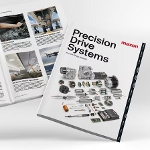 maxon has completely overhauled its 2026/2027 catalog, streamlining its portfolio to reduce complexity and improve navigation. The new structure features dedicated sections for business units -- Medical, Aerospace, Industrial Automation, Mobility -- and specialized fields like Robotics and Space. Key product highlights include new ECX PRIME and ECX FLAT motors, GSW planetary gearheads, and ESCON2/EPOS4 controllers.
Learn more and check it out.
Wanted by DARPA: Partners to create robotic satellite-servicing capabilities
An increasing number of expensive, mission-critical satellites are launched every year into geostationary Earth orbit (GEO), approximately 22,000 miles (36,000 km) above the Earth. Unlike objects in low Earth orbit (LEO), such as the Hubble Space Telescope, satellites in GEO are essentially unreachable with current technology. As a result, these satellites are designed to operate without any upgrades or repairs for their entire lifespan -- a methodology that demands increased size, complexity, and cost. The ability to safely and cooperatively interact with satellites in GEO would immediately revolutionize military and commercial space operations alike, lowering satellite construction and deployment costs and improving satellite lifespan, resilience, and reliability.
To expedite these potential benefits, the Defense Advanced Research Projects Agency (DARPA) is considering a flight demonstration to introduce DARPA-developed space robotics capabilities in GEO within the next five years. Because the majority of satellites in GEO are commercially owned, DARPA is particularly interested in establishing a public-private partnership that would make cooperative robotic servicing available to both military and commercial GEO satellite owners on a fee-for-service basis. The partnership would help develop near-term technical capabilities and significantly contribute toward the creation of a sustainable, commercially owned-and-operated space robotics enterprise. DARPA has issued a Request for Information (RFI) (http://go.usa.gov/yBdJ) seeking technical, security and business insights to support the agency's pursuit of these goals.
"We're asking the space community to think hard about how they want the future of space operations to look and how GEO robotics could help," said Gordon Roesler, DARPA program manager. "Their insights are essential as we take the first concrete steps toward viable satellite-servicing capabilities in GEO. If we're successful, we will significantly accelerate development of a capacity to maximize the utility of current space infrastructure and enhance the capabilities of future systems."
The RFI invites input in two primary areas:
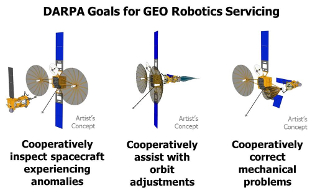
1. Technical characteristics for a robotic servicer that would integrate DARPA-developed space robotics technologies into commercially available spacecraft designed for GEO. Building on DARPA's Phoenix program and more than a decade of the agency's other investments in space robotics, the jointly developed GEO robotic servicer would support a variety of multi-year on-orbit missions, including:
- Cooperative inspection of functional spacecraft that may have experienced anomalies while operating in GEO;
- Cooperative correction of mechanical problems, such as solar array and antenna deployment malfunctions; and
- Cooperative assistance with orbit change maneuvers, including relocation or transfer to disposal orbit.
2. Business arrangements and practices that would best facilitate a commercial spacecraft servicing enterprise that is long-lived and self-sustaining, and would achieve the greatest value for U.S. national and economic security. DARPA envisions that a non-traditional acquisition instrument may be appropriate to establish this partnership. DARPA wishes to consider creative solutions in this domain and thus desires industry input for structuring the commercial partnership solicitation.
"Creating a public-private partnership is an innovative way to ensure that GEO robotic servicing gets community buy-in to succeed long term," Roesler said. Moreover, he said, a public-private partnership would support the White House's National Security Space Strategy of 2011, which states, "Strategic partnerships with commercial firms will be pursued in areas that both stabilize costs and improve the resilience of space architectures on which we rely."
DARPA is aware of current industry-led servicing development efforts, particularly those aiming to enable on-orbit refueling and satellite life extension. The agency welcomes information on possible early-opportunity collaborations or partnerships involving such missions, including technology demonstration and maturation, data sharing, or testing.
DARPA anticipates that responders may fall into one of three general categories: hardware/software developers (e.g., spacecraft providers and ground system developers); satellite servicing organizations; and service clients, such as commercial communications satellite operators. Responders should describe how their organizational capabilities and past experience with any of the following areas would contribute to the success of the program:
- Spacecraft development, integration, testing, and on-orbit operations;
- On-orbit servicing technology development and/or business case analysis;
- Robotics technologies, including hardware (sensors, actuators, etc.) and software (control, teleoperations, etc.); and/or
- Satellite fleet ownership, operation, and management.
Responses are due November 3, 2014, to DARPA-SN-14-51@darpa.mil by 12:00 PM Eastern Time. All technical and administrative correspondence and questions regarding this announcement and how to respond should be sent to that same email address.
Source: DARPA
Published September 2014
Rate this article
View our terms of use and privacy policy