 |
| December 15, 2015 | Volume 11 Issue 47 |
Electrical/Electronic News & Products
Designfax weekly eMagazine

Archives
Partners
Manufacturing Center
Product Spotlight
Modern Applications News
Metalworking Ideas For
Today's Job Shops
Tooling and Production
Strategies for large
metalworking plants
High-capacity benchtop video measurement system
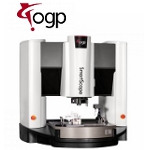 Optical Gaging Products has introduced the SmartScope® E18, a compact, benchtop video measurement system. Featuring a 12" x 12" stage, IntelliCentric™-E fixed-lens optics, and VIRTUAL ZOOM™ technology, it offers fully automatic 3-axis performance without taking up floor space. Standard LED lighting, a rigid fixed-bridge design, optional touch probes, and advanced metrology software ensure accurate, repeatable inspection.
Learn more.
Tech Tip: Fan selection - Why airflow is not just CFM
 For many engineers, fan selection starts and ends with a single number: CFM (cubic feet per minute). Higher CFM feels like a clear win. More air moved must mean better cooling. However, in practice, this assumption is one of the most common causes of thermal problems, excess noise, and late-stage redesigns. Find out why.
Read this Orion Fans technical article.
Useful! Snap-together LED enclosure lighting
 Seifert StripLite SL 4000 Series LED enclosure lighting provides bright illumination to 700 lumens. On/off switch and motion sensor models are available. Easily daisy chain up to 16 light strips. Magnetic or clip mounting. See video/info on website or contact Bristol Instruments for more information.
Learn about snap-together lighting.
The hidden hardware helping AI's heat problem: PCHEs
 Across AI infrastructure, thermal constraints now connect semiconductor design with power and cooling systems. More compact, lighter, and efficient than conventional shell-and-tube models, printed circuit heat exchangers save floor space, reduce energy costs, and improve overall efficiency in dense, hyperscale environments.
Read the full article.
Nearly 1,000 parts: Industrial enclosure range expanded
 Altech Corp. has expanded its industrial enclosure lineup to 10 unique series with nearly 1,000 parts! Designed for control, junction, and terminal applications, these plastic and aluminum housings offer up to IP69 protection. They mount directly to walls or panels, resisting chemicals, corrosion, flames, impacts, and severe outdoor conditions without sacrificing aesthetics.
Find your perfect enclosure today.
Cool Tools: MetraSCAN BLACK2 -- Next-gen shop-floor 3D inspection
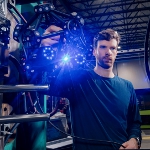 You'll gain some superhero powers when you brandish FARO CREAFORM's new MetraSCAN BLACK2, a next-gen portable metrology-grade optical 3D scanner engineered to deliver total inspection flexibility on the shop floor. This unit boasts a 3-in-1 architecture that combines C-Track scanning, stand-alone scanning, and probing in a single metrology-grade system.
Read the full article.
Compact, touchless position sensors: Wear-free operation in tight spaces
Novotechnik's TFD-4000 Series of touchless linear position sensors delivers wear-free measurement in tight spaces. Featuring ranges up to 50 mm, IP67 protection, 12-bit resolution, and analog outputs, these reliable sensors operate from -40 C to 125 C across diverse industrial, mobile, and medical applications such as short-stroke linear valve positioning, solenoid valves, off-highway brake actuation, and more.
Learn more.
World's first 10-m safety laser scanner: See farther, protect more
Datasensing, Datalogic's Sensor & Safety and Machine Vision business unit, has launched the SLS10 Safety Laser Scanner, the world's first 10-meter safety laser scanner. Delivering a 275-degree scanning angle, 240-m2 of coverage, and an 84-msec response time, the SLS10 protects larger workspaces with fewer devices. It features best-in-class angular resolution for precise AGV navigation, SIL-2/PLd compliance, dust immunity, and the new ONEGUI platform for simplified configuration.
Learn more and see it in action.
Accelerate AI-driven machine vision systems
BitFlow has announced full production of its Claxon CXP-12 frame grabbers, designed for NVIDIA GPU-accelerated machine vision. Across five models, the CoaXPress 2.0 lineup delivers up to 50 Gbps -- five times 10 GigE Vision -- eliminating data bottlenecks. The full CXP-12 specification ensures deterministic, high-bandwidth streaming to unleash modern AI inference models.
Learn more.
Millimeter-wave imaging inspection in real time
With its new quality and inspection R&S IMAGER millimeter-wave scanner, Rohde & Schwarz aims to simplify the industrial inspection of packaged products. The system sees through common packaging materials at production speed without using X-rays, protecting both products and operators. The high-contrast 3D images are used as digital twins and can be automatically integrated into AI-powered fault-detection systems. Sees through plastics, cardboard, and composites. Applications include food and beverage, pharmaceuticals, logistics.
Learn more.
What are single-loop process controllers?
PLCs are powerful, but complex control isn't always necessary. For standalone processes requiring single-variable monitoring -- like temperature, pressure, or flow -- a single-loop controller is ideal. See how single-loop controllers can streamline your next project.
Read the AutomationDirect tech tip.
Great Resources: Flexible circuit design guide
Tech-Etch uses advanced techniques to manufacture flex and rigid-flex circuits to exacting customer specs. Special processes include selective plating a single circuit with two different finishes, contoured circuits with variable metal thickness, semi-additive and subtractive techniques, open window or cantilevered contact leads, plus SMT for component assembly. Tech-Etch specializes in flexible circuits for medical, telecommunications, aerospace, semiconductor, and other high-reliability electronic applications.
Learn about flex circuits and get the guide (no registration required).
EMI Investigations: New immunity development system
Saelig Company announces the Langer E1 Immunity Development System for EMI investigations. This compact, affordable kit simulates burst and ESD interference to pinpoint layout weak spots down to IC pins. By eliminating "black box" guesswork early in development, engineers can efficiently identify coupling mechanisms, test measures, and resolve immunity issues before compliance failure.
Learn more and see it in action.
Battery packs for unmanned aerial vehicles
Re:Build Manufacturing has launched U.S.-assembled, NDAA-compliant lithium-ion battery packs for commercial, public safety, and defense UAV applications. Available in Core, Power, and Performance series, the packs use non-FEOC cells and are produced at Re:Build's advanced facility in New Kensington, PA. Re:Build also offers custom pack and battery management system development.
Learn more.
Easy-to-use precision measurement system
Optical Gaging Products has announced the StarLite S1, a compact, semi-automatic 3-axis video measurement system. It combines fully automatic video measurements with manual stage motion and features an IntelliCentric-S optical system for high-resolution images. Powered by Measure-X software, this system delivers fast, repeatable, high-accuracy results, making it ideal for both shop-floor and quality-control applications.
Learn more.
Researchers create impressive image of what dolphins 'see' when they use echolocation
[Editor's note: While I still have questions about the enhancements in the "cymatic-holographic imaging technique," the idea that dolphins may communicate via shared echolocation images is incredibly fun to think about. -- Mike]
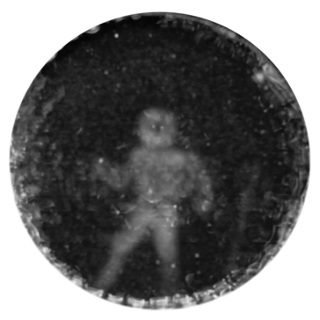
Researchers in the USA and UK and have made a significant breakthrough in imaging a submerged man from the echolocation beam transmitted by a dolphin.
The resulting image is faint, but key features of the man and background are revealed after using enhancement techniques. Team leader Jack Kassewitz of SpeakDolphin.com says he is delighted with the result. "This is the first time we have captured a 'what-the-dolphin-saw' image of a submerged man," he says. "We employed a similar technique in 2012 to capture a dolphin's echolocation picture of a flowerpot and several other submerged plastic objects, but the present research has confirmed that result and so much more."
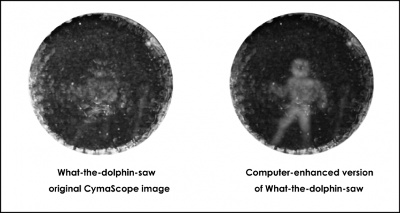
A dolphin's echolocation beam was directed at a submerged man, and the echo was captured by a hydrophone system. The echo signal was then sent to a sound imaging laboratory that created the first-ever "what-the-dolphin-saw" image of the submerged man by using a cymatic-holographic imaging technique.
The research took place at the Dolphin Discovery Center in Puerto Aventuras, Mexico. The submerged man, Jim McDonough, wore a weight belt and exhaled most of the air in his lungs to overcome his natural buoyancy, then arranged himself against a shelf in the research pool. It was decided not to use a breathing apparatus to ensure that there would be no bubbles to adversely affect the results of the experiment. The whole experiment had to be accomplished within a single breath.
With Jim in position, a female research dolphin named Amaya was tasked to echolocate the man, to "see" Jim with her sound-vision sense.
Most of the resulting echo from Jim's body was reflected back to Amaya, but one of water's sonic properties is similar to that of air, causing sounds to diffract in many directions simultaneously. One of the theoretical implications of this property of water is that when a dolphin sees an object with its sound-vision sense, it is possible that all other dolphins in the near vicinity will also receive the image. This effect could have profound benefits for a pod of dolphins. In experimental setups, it has been found that the hydrophone (high-frequency microphone) can be positioned almost anywhere in the vicinity of the target object or dolphin.
A further finding of the experiment setup is that it is not necessary to collect the whole of the dolphin's reflected echo beam. All parts of the echo contain quasi-holographic sonic data that represent the object and can, in turn, be used to create an image of the object. Light provides a good analogy to this basic principle: When light reflects from an object, it contains data that represents the object; any small part of the reflected light contains an image of the object as viewed from a particular angle.
The dolphin's echo signal was recorded using high-specification audio equipment by Alex Green and Toni Saul, and sent via email to the CymaScope laboratory in the UK. Acoustic physics researcher John Stuart Reid, head of the CymaScope team, says, "When I received the recording, Jack had told me only that it might contain an echolocation reflection from someone's face. I noticed the file named 'Jim,' so I assumed that the image, if it existed within the file, would be that of a man's face. I was somewhat dubious whether this could be achieved, because the imaging we had carried out in 2012 was of simple plastic objects that had no inherent detail, whereas a face is a highly detailed form. I listened to the file and heard an interesting structure of clicks.
"The basic principle of the CymaScope instrument is that it transcribes sonic periodicities to water wavelet periodicities, in other words, the sound sample is imprinted onto a water membrane. The ability of the CymaScope to capture 'what-the-dolphin-saw' images relates to the quasi-holographic properties of sound and its relationship with water, which will be described in a forthcoming science paper on this subject.
"When I injected the click train into the CymaScope, while running the camera in video mode, I saw a fleeting shape on the water's surface that did not resemble a face. I replayed the video, frame by frame, and saw something entirely unexpected, the faint outline of a man. At this point, I sent the image to Jack, with a note that simply read, ‘This frame has what appears to be the fuzzy silhouette of almost a full man. No face."
When Jack Kassewitz received the still image, it turned out that he was just as surprised as Reid because he had been unaware that Amaya had been echolocating on Jim as she approached him from several feet away.
"I was astonished when I received the faint image of Jim, as I had no idea that Amaya had been echolocating during its in-run," says Kassewitz. "I called John in the UK, and we discussed the image in detail. Later, he sent me a computer-enhanced version that revealed several details not easily seen in the raw image, such as the weight belt worn by Jim.
"Having demonstrated that the CymaScope can capture 'what-the-dolphin-saw' images, our research infers that dolphins can at least see the full silhouette of an object with their echolocation sound sense -- but the fact that we can just make out the weight belt worn by Jim in our 'what-the-dolphin-saw' image suggests that dolphins can see surface features too. The dolphin has had around 50 million years to evolve its echolocation sense, whereas marine biologists have studied the physiology of cetaceans for only around five decades. ... We now think it is safe to speculate that dolphins may employ a 'sono-pictorial' form of language, a language of pictures that they share with each other. If that proves to be true, an exciting future lies ahead for interspecies communications."
Learn more at http://SpeakDolphin.com.
Source: Sonic Age Ltd
Published December 2015
Rate this article
View our terms of use and privacy policy