 |
| January 12, 2016 | Volume 12 Issue 02 |
Electrical/Electronic News & Products
Designfax weekly eMagazine

Archives
Partners
Manufacturing Center
Product Spotlight
Modern Applications News
Metalworking Ideas For
Today's Job Shops
Tooling and Production
Strategies for large
metalworking plants
Be one of the first to harness next-gen Edge AI
 SECO's new SOM-SMARC-Dragonwing-IQ8 is the world's first industrial SMARC module powered by Qualcomm Dragonwingâ„¢ IQ8 technology. Delivering 40 TOPS of AI performance, high-speed industrial connectivity, and seamless Arduino transition, it is purpose-built for robotics, vision, and autonomous systems. OEM evaluation samples are limited -- request yours today to start building.
Learn more.
The 7 best ways to automate your SOLIDWORKS designs
 According to the experts at Hawk Ridge Systems, automating tasks in SOLIDWORKS is a great way to improve productivity and make your life easier. Learn about SOLIDWORKS' many automation capabilities including: tools for automated drawing generation, design tables, custom macros, global variables and equations, and brand-new AI-based tools built directly into SOLIDWORKS. See how these features can help you work more efficiently.
View the video.
How standard AI is messing up industrial automation quotes
 Reshape Automation's new Industrial AI Accuracy Index 2026 tested three leading AI models -- GPT-6 Astra, Claude, and Gemini -- on 100 questions drawn from what customers ask distributors and OEMs every day, covering parts from 14 industrial manufacturers. From memory alone, the models got 12% to 14% right. With web search, the best scored 52%. About 1 in 3 wrong answers gave a specific part number or figure with no caveat.
Read the full article.
Engineer's Toolbox: What is ground loop feedback?
 Improper grounding can create problems in data logging, data acquisition, and measurement and control systems. One of the most common problems is known as ground loop feedback. Experts at CAS DataLoggers run through five ways to eliminate this problem.
Read the full article.
New pressure transmitters from AutomationDirect
 Automation-Direct's new MP Sensor Inline pressure transmitters plug directly into pneumatic lines via built-in push-in connections from 5/32" to 3/8" (and 6 mm). Ultra-compact and mountable anywhere, they deliver +/-0.5% accuracy, IP68 durability, and versatile outputs (4-20 mA, NPN/PNP, IO-Link). Need touch control? The new P.Touch series adds a TFT touchscreen for effortless setup and sub-3ms response.
Learn more and get all the specs.
High-capacity benchtop video measurement system
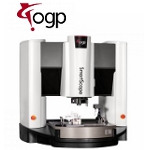 Optical Gaging Products has introduced the SmartScope® E18, a compact, benchtop video measurement system. Featuring a 12" x 12" stage, IntelliCentric™-E fixed-lens optics, and VIRTUAL ZOOM™ technology, it offers fully automatic 3-axis performance without taking up floor space. Standard LED lighting, a rigid fixed-bridge design, optional touch probes, and advanced metrology software ensure accurate, repeatable inspection.
Learn more.
Tech Tip: Fan selection - Why airflow is not just CFM
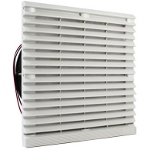 For many engineers, fan selection starts and ends with a single number: CFM (cubic feet per minute). Higher CFM feels like a clear win. More air moved must mean better cooling. However, in practice, this assumption is one of the most common causes of thermal problems, excess noise, and late-stage redesigns. Find out why.
Read this Orion Fans technical article.
Useful! Snap-together LED enclosure lighting
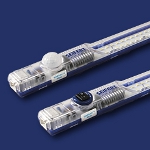 Seifert StripLite SL 4000 Series LED enclosure lighting provides bright illumination to 700 lumens. On/off switch and motion sensor models are available. Easily daisy chain up to 16 light strips. Magnetic or clip mounting. See video/info on website or contact Bristol Instruments for more information.
Learn about snap-together lighting.
The hidden hardware helping AI's heat problem: PCHEs
 Across AI infrastructure, thermal constraints now connect semiconductor design with power and cooling systems. More compact, lighter, and efficient than conventional shell-and-tube models, printed circuit heat exchangers save floor space, reduce energy costs, and improve overall efficiency in dense, hyperscale environments.
Read the full article.
Nearly 1,000 parts: Industrial enclosure range expanded
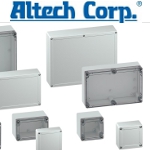 Altech Corp. has expanded its industrial enclosure lineup to 10 unique series with nearly 1,000 parts! Designed for control, junction, and terminal applications, these plastic and aluminum housings offer up to IP69 protection. They mount directly to walls or panels, resisting chemicals, corrosion, flames, impacts, and severe outdoor conditions without sacrificing aesthetics.
Find your perfect enclosure today.
Cool Tools: MetraSCAN BLACK2 -- Next-gen shop-floor 3D inspection
 You'll gain some superhero powers when you brandish FARO CREAFORM's new MetraSCAN BLACK2, a next-gen portable metrology-grade optical 3D scanner engineered to deliver total inspection flexibility on the shop floor. This unit boasts a 3-in-1 architecture that combines C-Track scanning, stand-alone scanning, and probing in a single metrology-grade system.
Read the full article.
Compact, touchless position sensors: Wear-free operation in tight spaces
Novotechnik's TFD-4000 Series of touchless linear position sensors delivers wear-free measurement in tight spaces. Featuring ranges up to 50 mm, IP67 protection, 12-bit resolution, and analog outputs, these reliable sensors operate from -40 C to 125 C across diverse industrial, mobile, and medical applications such as short-stroke linear valve positioning, solenoid valves, off-highway brake actuation, and more.
Learn more.
World's first 10-m safety laser scanner: See farther, protect more
Datasensing, Datalogic's Sensor & Safety and Machine Vision business unit, has launched the SLS10 Safety Laser Scanner, the world's first 10-meter safety laser scanner. Delivering a 275-degree scanning angle, 240-m2 of coverage, and an 84-msec response time, the SLS10 protects larger workspaces with fewer devices. It features best-in-class angular resolution for precise AGV navigation, SIL-2/PLd compliance, dust immunity, and the new ONEGUI platform for simplified configuration.
Learn more and see it in action.
Accelerate AI-driven machine vision systems
BitFlow has announced full production of its Claxon CXP-12 frame grabbers, designed for NVIDIA GPU-accelerated machine vision. Across five models, the CoaXPress 2.0 lineup delivers up to 50 Gbps -- five times 10 GigE Vision -- eliminating data bottlenecks. The full CXP-12 specification ensures deterministic, high-bandwidth streaming to unleash modern AI inference models.
Learn more.
Millimeter-wave imaging inspection in real time
With its new quality and inspection R&S IMAGER millimeter-wave scanner, Rohde & Schwarz aims to simplify the industrial inspection of packaged products. The system sees through common packaging materials at production speed without using X-rays, protecting both products and operators. The high-contrast 3D images are used as digital twins and can be automatically integrated into AI-powered fault-detection systems. Sees through plastics, cardboard, and composites. Applications include food and beverage, pharmaceuticals, logistics.
Learn more.
Researchers build a transistor from a molecule and a few atoms
An international team of physicists has used a scanning tunneling microscope to create a minute transistor consisting of a single molecule and a small number of atoms.
The observed transistor action is markedly different from the conventionally expected behavior and could be important for future device technologies as well as for fundamental studies of electron transport in molecular nanostructures.
The physicists represent the Paul-Drude-Institut fur Festkorperelektronik (PDI) and the Freie Universitat Berlin (FUB), Germany; the NTT Basic Research Laboratories (NTT-BRL), Japan; and the U.S. Naval Research Laboratory (NRL). Their complete findings are published in the July 13, 2015, issue of the journal Nature Physics.

Scanning tunneling microscope image of a phthalocyanine molecule centered within a hexagon assembled from 12 indium atoms on an indium arsenide surface. The positively charged atoms provide the electrostatic gate of the single-molecule transistor. [Photo: U.S. Naval Research Laboratory]
Transistors have a channel region between two external contacts and an electrical gate electrode to modulate the current flow through the channel. In atomic-scale transistors, this current is extremely sensitive to single electrons hopping via discrete energy levels. In earlier studies, researchers have examined single-electron transport in molecular transistors using top-down approaches, such as lithography and break junctions. But atomically precise control of the gate -- which is crucial to transistor action at the smallest size scales -- is not possible with these approaches.
The team used a highly stable scanning tunneling microscope (STM) to create a transistor consisting of a single organic molecule and positively charged metal atoms, positioning them with the STM tip on the surface of an indium arsenide (InAs) crystal.
Dr. Kiyoshi Kanisawa, a physicist at NTT-BRL, used the growth technique of molecular beam epitaxy to prepare this surface. Subsequently, the STM approach allowed the researchers to assemble electrical gates from the +1 charged atoms with atomic precision and then to place the molecule at various desired positions close to the gates. Dr. Stefan Fölsch, a physicist at the PDI who led the team, explained that "the molecule is only weakly bound to the InAs template. So, when we bring the STM tip very close to the molecule and apply a bias voltage to the tip-sample junction, single electrons can tunnel between template and tip by hopping via nearly unperturbed molecular orbitals, similar to the working principle of a quantum dot gated by an external electrode. In our case, the charged atoms nearby provide the electrostatic gate potential that regulates the electron flow and the charge state of the molecule."
But there is a substantial difference between a conventional semiconductor quantum dot -- comprising typically hundreds or thousands of atoms -- and the present case of a surface-bound molecule. Dr. Steven Erwin, a physicist in the Center for Computational Materials Science at NRL and expert in density-functional theory, pointed out that, "the molecule adopts different rotational orientations, depending on its charge state. We predicted this based on first-principles calculations and confirmed it by imaging the molecule with the STM."
This coupling between charge and orientation has a dramatic effect on the electron flow across the molecule, manifested by a large conductance gap at low bias voltages. Dr. Piet Brouwer, a physicist at FUB and expert in quantum transport theory, said, "This intriguing behavior goes beyond the established picture of charge transport through a gated quantum dot. Instead, we developed a generic model that accounts for the coupled electronic and orientational dynamics of the molecule." This simple and physically transparent model entirely reproduces the experimentally observed single-molecule transistor characteristics.
The perfection and reproducibility offered by these STM-generated transistors will enable researchers to explore elementary processes involving current flow through single molecules at a fundamental level. Understanding and controlling these processes -- and the new kinds of behavior to which they can lead -- will be important for integrating molecule-based devices with existing semiconductor technologies.
This research is funded by the German Research Foundation, Collaborative Research Network 658.
Source: U.S. Naval Research Laboratory
Published August 2015
Rate this article
View our terms of use and privacy policy