 |
| April 04, 2017 | Volume 13 Issue 13 |
Motion Control News & Products

Designfax weekly eMagazine
Archives
Partners
Manufacturing Center
Product Spotlight
Modern Applications News
Metalworking Ideas For
Today's Job Shops
Tooling and Production
Strategies for large
metalworking plants
OnRobot launches 2FGP20 Fork electric gripper for challenging palletizing applications
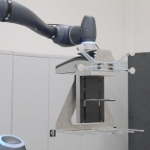 OnRobot has launched the 2FGP20 Fork, a standardized, all-electric fork palletizing gripper designed specifically for open boxes, display boxes, and other low-rigidity boxes. It is the first globally available, out-of-the-box tool for these often-challenging packaging types.
Read the full article.
Say goodbye to circular motion limits
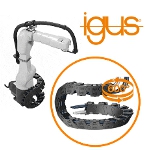 The igus twisterchain® delivers ultra-smooth 360-degree+ rotary and spiral movement for high loads at speeds over 1 m/s. Engineered with a modular, cable-friendly design and guided trough technology, it is lab tested to 1M+ cycles. Maximum strength, ultimate flexibility, and built to handle your toughest rotating applications with ease. The unsupported twisterchain is perfect for the robot base of small industrial robots.
Learn more.
How to: Multiplexed control of closed-loop piezo actuators
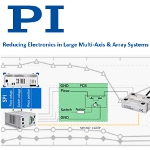 Piezoelectric actuators are widely used in adaptive optics because they combine high positioning resolution, stiffness, fast response, useful stroke, and mechanical robustness. The challenge comes when the number of actuators increases. Learn how a research team at PI developed and tested a multiplexed system for closed-loop operation, with a focus on the factors that limit its performance.
Read this informative PI technical article.
Next-gen smart servos with higher performance
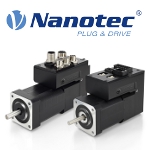 Nanotec's next-gen PD2 smart servos integrate a NEMA 17 motor, controller/drive, and absolute encoder into a compact unit. Offering up to 75% higher rated torque in stepper and BLDC versions, they feature FOC, EtherCAT, and IP65 protection. Applications include packaging machinery, laboratory automation, medical tech, semiconductor manufacturing, intralogistics, and printing equipment.
Learn more.
Meet Hevi-Rail: The heavy-duty roller bearing system
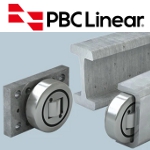 Hevi-Rail is a cost-effective, heavy-duty linear bearing system designed for medium- to low-precision applications. Easy to mount and align, its hardened steel components evenly disperse forces to handle loads up to 60 tons. Offering high radial and axial capacities, it excels under continuous use in harsh environments like foundries and construction sites.
Learn more and see Hevi-Rail in action.
NORD expands compact VFD family up to 200 hp
 NORD DRIVE-SYSTEMS' NORDAC PRO SK 500P VFD series now powers up to 200 hp with multi-protocol Ethernet, integrated functional safety, and wireless diagnostics. Its compact design reduces cabinet space and costs across applications such as airport baggage handling, intralogistics, bulk material handling, and packaging. Advanced variants deliver precise control, online parameterization, and free NORDCON diagnostic software.
Learn more and get all the options and specs.
How to maximize and optimize stepper motor control
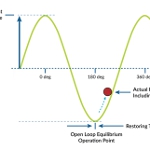 Engineers from PMD take a comprehensive look at how to control two-phase stepper motors, beginning with the basics (operations, strengths, and weaknesses) and moving on to traditional and updated advanced techniques for control including closed loop. A very thorough presentation.
Read the Performance Motion Devices technical article.
ABB Baldor-Reliance washdown motors: 40 years of durability
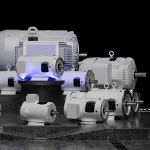 Celebrating four decades of washdown excellence, ABB's Baldor-Reliance line expands to include White Washdown models up to 150 hp with NEMA Premium efficiency. From cast iron to stainless steel, this complete portfolio -- including paint-free options -- delivers rugged, high-horsepower reliability. Power your processing operations with unmatched durability engineered specifically for demanding, wet, and humid environments.
Learn more.
Cobots get 4 m tall with the 8th-Axis Vertical Robot Transfer Unit
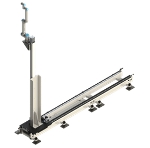 Designed to optimize industrial processes across various sectors, the 8th-Axis Vertical Robot Transfer Unit (RTU-V) from Bishop-Wisecarver features a vertical travel length of up to 4 m, enabling a single small robot or cobot to cover large areas traditionally requiring multiple robots. This innovation not only boosts productivity but also offers considerable cost savings, making it an ideal solution for industries such as logistics, manufacturing, agriculture, packaging, and more. Extended reach allows robots to perform tasks on oversized workpieces, such as rocket tubes, boat hulls, and aerospace structures, with ease.
View the video.
Simplify pick and place with the THK PPR
 THK's Pick-and-Place Robot PPR is a robot that can pick up delicate or minute workpieces such as electronic components and quickly and accurately transfer and assemble them to the base. In addition to the basic movements of raising, lowering, and rotating, various sensors (such as a force sensor), solenoid valves, and controller are all in one unit. The PPR is a process-optimized robot that can improve the production speed of the parts assembly processes and reduce work damage.
Learn more.
New ROBOMACHINE products and more from FANUC
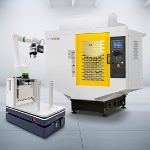 FANUC America demonstrated the future of manufacturing at IMTS 2026 last week, showcasing how Physical AI-powered automation integrates advanced CNC, machining, and robotics to boost productivity and speed deployment. One highlight was the debut of the ROBODRILL DC Series machining centers -- including the high-speed D54CS and D74CS models -- alongside interactive demonstrations featuring collaborative robots, robotic welding, material joining, painting, and assembly technology.
See all the FANUC new tech featured at IMTS.
What is a stick-slip bi-phase positioning stage?
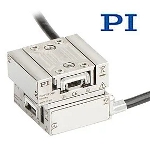 PI (Physik Instrumente) is expanding its Bi-Phase Inertia Drive (BIX) technology with new motor architectures for compact, high-precision nanopositioning applications. Based on the piezo stick-slip principle, BIX stages replace conventional single actuators with two synchronized multilayer piezo actuators. This compact design delivers precise, repeatable motion while maintaining piezo inertia self-locking.
Learn more about this technology.
Universal Robots unveils Gen 7 robot platform!
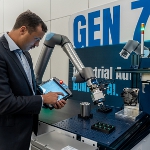 Redesigned from controller to tool flange, the new Gen 7 robot platform is out-of-the-box AI-ready, giving companies the modern software tools and next-level connectivity they need to confidently take AI from the lab into industrial operations. Gen 7 represents a unified system upgrade designed to make even the most demanding tasks and setups easier. See all the new features -- they are significant.
Read the full article.
Adaptor mount and hub options provide flexibility
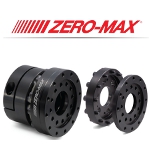 Zero-Max's new CD Power-Series Flexible Shaft Couplings feature ISO Flange Adaptors matching ISO 9409-1 patterns on gear reducers and robotics. Eliminating custom transitions, this direct connection enhances torsional stiffness and positioning accuracy while saving space, weight, and inertia. Offering continuous torque up to 65,000 in.-lb and versatile hub options, these compact couplings deliver high power density.
Learn more.
Top-shelf motors: Completely revised maxon catalog
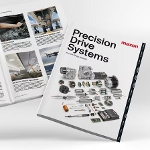 maxon has completely overhauled its 2026/2027 catalog, streamlining its portfolio to reduce complexity and improve navigation. The new structure features dedicated sections for business units -- Medical, Aerospace, Industrial Automation, Mobility -- and specialized fields like Robotics and Space. Key product highlights include new ECX PRIME and ECX FLAT motors, GSW planetary gearheads, and ESCON2/EPOS4 controllers.
Learn more and check it out.
Air Force develops robotic technology for coating F-22 Raptor fighter jets
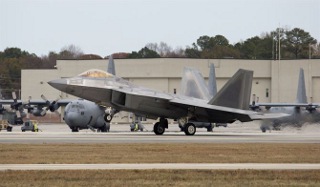
Robots are now being placed into operation at the Ogden Air Logistics Complex at Hill Air Force Base, UT, to make the process of restoring specialized coatings on F-22 Raptor engine inlets much safer for aircraft maintenance personnel. [Courtesy photo: Andrew McMurtrie, Lockheed Martin Aeronautics Co.]
By Bryan Ripple, 88th Air Base Wing, Wright-Patterson Air Force Base, Ohio
Robotic technology developed through the Air Force Small Business Innovation Research program will soon make the process of restoring specialized coatings on F-22 Raptor engine inlets more efficient for aircraft maintenance personnel during depot maintenance at the Ogden Air Logistics Complex located at Hill Air Force Base, UT.
The initiative has been a team effort, led by engineers from the Air Force Research Laboratory and the Air Force Life Cycle Management Center's F-22 System Program Office, both at Wright-Patterson AFB and Hill AFB.
Aerobotix, a small business located in Madison, AL, was selected as the SBIR Phase II winner for the project. The company specializes in providing turn-key robotic systems for aerospace, military, NASA, and general industrial applications, while providing a range of solutions for robotic and automated coating needs.
The robotics project has three goals: reducing the number of hours aircraft maintainers are required to work in confined spaces while wearing full personal protective equipment, improving consistency and overall quality of the coatings applied, and reducing the overall hours required to restore the inlets for the lifecycle of the aircraft, said Colin Allen, an AFLCMC F-22 structures and system safety engineer at Hill AFB.
As part of the $1.5 million SBIR contract, Aerobotix developed the robotic system, a complex multi-axis system with a long carbon fiber arm to reach deep into the engine inlet ducts.
The AFLCMC F-22 System Program Office at Hill AFB is in charge of managing the F-22 fleet from both an engineering and logistics perspective and is the lead agency for this effort.
"We're at a position within our F-22 fleet where we are restoring the intakes of the fleet here at the Hill AFB depot facility," Allen said.
Currently, this is a manual process where maintainers have to don a Tyvek suit and respirator as required PPE (personal protective equipment) in order to crawl into the intakes and recoat manually.
"It's not an easy process. It's kind of an awkward position to be in for a lengthy amount of time where the environment is actually considered a confined space here at Hill, so you need another person watching the person manually restoring the intakes," Allen said.
The ergonomics issues involved present a less-than-ideal situation for the depot maintainers to be in all day, so one of the goals of the program is to reduce the amount of time that a maintainer is exposed to that environment, Allen added.
"The depot F-22 maintainer's workload is challenging, and this project will help speed up that restoration process and ultimately the throughput of the depot. The number of F-22s to go through the restoration process on a yearly basis will be based on mission requirements and depot availability, but the objective remains to get the aircraft back into the warfighter's hands as quickly as possible," Allen said.
"The actual removal of coatings from the F-22 inlets remains a manual process where maintainers go inside the intakes and strip the coatings using hand tools," said Tech. Sgt. Justin Daywalt, the low observable/structures integrated support manager for the F-22 System Program Office at Hill AFB.
The coatings removal process is manual, and an automated process has not yet been qualified.
For Phase three of the SBIR process, AFLCMC has partnered with the Small Business Office at Hill AFB to procure Aerobotix robots for three of the bays at Hill AFB.
"We've gone through a validation verification of several of these booths by using the robots to coat one of our trainer aircraft -- a ground-based aircraft that the air battle damage repair group here loaned us for the purposes of our program. It's actually a representative of a production intake, so we can go through the full gamut of things that we need to do for production aircraft as far as bringing the aircraft in, jacking it up, locating it, positioning the robots, and actually physically applying the coatings we need to restore the intakes," said Allen.
The next step is to receive and analyze test results of the robot sprays, followed by depot personnel being trained to use the robots by Aerobotix personnel, Allen said. Based off that, the engineering group will get together and decide when to push forward with a full production aircraft in the depot for the intake coating restoration operation.
"From the engineering perspective, we like what we see. There are some issues we're working through, but any project has its issues that need to be smoothed out," he said.
"In addition to the ergonomics issues maintainers must face when restoring coatings inside an F-22 intake, another important factor that comes into play is the tolerance requirements of the application process," Strunk said.
"We will see consistency from jet to jet. With manual application involving different technicians applying the coatings through a spray gun, it's very hard to (meet the application requirements) the first time. With a robot, we're expecting to meet those requirements more consistently, reducing the additional time needed to manually work in the inlets. The second part of that is the hazards associated with the materials we're applying. Once we remove an individual out of the intake, they're not going to be exposed to those materials to the same degree that we are currently with manual application," Strunk added.
"If there's any concern right now that we have on the production side of it, it's just our schedule. We've gotten very good at what we do with this intake coating restoration process over the last three years or so. Now that we're introducing the robots, we want to still be able to see the schedule maintained at the same rate and get better. However, there's always that concern of being able to meet that tempo utilizing a new piece of equipment. Ultimately, I think we will see some hiccups, but in the end, it will be all for the better," he said.
The project has included the use of computing power using modeling and simulation to accomplish the objectives for the depot F-22 maintenance team, said Carl Lombard, a materials research engineer with the Electronics and Sensors Branch, Manufacturing and Industrial Technologies Division, Materials and Manufacturing Directorate at AFRL.
"This enables the maintainers to avoid collision with the inlets and the plane while developing the fastest paths to correctly apply the coatings," he said.
"We're producing fifth-generation aircraft maintenance capabilities for fifth-generation fighters," said Allen.
According to the project team, Aerobotix personnel have utilized their experience with the process to make the transition to F-22 robotic intake coating restoration as smooth as possible for all involved.
"One of the reasons Aerobotix was chosen is because they're certainly an industry leader as far as aircraft robotics goes in their use of robotics for aircraft maintenance on the F-22 and F-35 (Lightning II) programs. They have certainly been more than accommodating, to not only the AFRL and the SPO's needs, but also the depot's needs, as far as maintaining their schedule and reevaluating when they need to be in the depot doing work and during the validation process," said Allen.
The exact amount of time saved by using the robots for F-22 intake coating restoration is not yet known.
"There's definitely going to be areas where we shorten the time span. However, we are going to have to change our processes quite drastically, and that may cause some additional time that we are not normally used to. Once we get technicians in there working with it, they're going to find those ways to make things faster," Strunk said.
Published April 2017
Rate this article
View our terms of use and privacy policy